Shortened vs Lengthened Glute Exercises: The Full List and How to Program Both
Shortened-position glute exercises are hardest when your hips are extended and the glutes are squeezed short — hip thrusts, glute bridges, cable kickbacks and frog pumps. Lengthened-position exercises are hardest when your hips are deeply bent and the glutes are stretched — Romanian deadlifts, deep squats, Bulgarian split squats and reverse lunges.
You want both, and the simplest way to get both is one of each per session: a hinge or deep single-leg lift first, a thrust or bridge second. And no, this has nothing to do with “short vs long glutes” — that’s about where your glute attaches to your pelvis and thigh bone, which is genetics, not range of motion. Both are covered below.
Shortened vs Lengthened Glute Exercises: The Full List
| Exercise | Position | Where it's hardest | Equipment | Best used as |
|---|---|---|---|---|
| Barbell hip thrust | Shortened | Top, at lockout | Barbell, bench | Main heavy lift |
| Dumbbell hip thrust | Shortened | Top, at lockout | Dumbbell, bench or couch | Main lift at home |
| Machine hip thrust | Shortened | Top, at lockout | Machine | Main lift, easy setup |
| Glute bridge | Shortened | Top | Floor, optional weight | Second lift or home main lift |
| Frog pump | Shortened | Top | Floor, optional weight | High-rep finisher |
| Cable kickback | Shortened | Near full hip extension | Cable | Accessory |
| Standing hip extension | Shortened | Near full hip extension | Machine or band | Accessory |
| Romanian deadlift | Lengthened | Bottom of the hinge | Barbell | Main heavy lift |
| Dumbbell RDL | Lengthened | Bottom of the hinge | Dumbbells | Main lift at home |
| Deep back squat | Lengthened | The bottom | Barbell, rack | Main lift |
| Bulgarian split squat | Lengthened | The bottom | Dumbbells, bench or couch | Main single-leg lift |
| Reverse lunge | Lengthened | The bottom | Dumbbells | Single-leg lift |
| Deficit reverse lunge | Lengthened | The bottom, deeper | Dumbbells, low step | Single-leg lift |
| Good morning | Lengthened | Bottom of the hinge | Barbell | Secondary hinge |
| 45-degree back extension | Hybrid | Near the top, with a stretch at the bottom | Back extension bench | Accessory |
| Step-up with a forward lean | Hybrid | Pushing off from the bottom | Box or stair, dumbbells | Single-leg lift |
| Walking lunge | Hybrid | The bottom, then the drive through | Dumbbells | Single-leg lift |
The three hybrids depend on how you do them. A back extension done with a rounded upper back and the hips driving loads the top more; a deep, slow lower loads the stretch. A step-up from a high box with a forward lean starts deep in hip flexion; a low box barely stretches the glute at all. A walking lunge stretches the back leg’s hip at the bottom and then asks the front glute to drive you forward.
One thing to keep straight: “shortened” and “lengthened” describe where an exercise is hardest, not where the glutes work. Your glutes work through the whole rep either way. For more form tutorials, the exercises hub has every lift.
Is the Lengthened Position Actually Better for Glute Growth?
Lengthened work probably has an edge, but it’s smaller and less glute-specific than the reels suggest — and it doesn’t make your hip thrusts wasted.
The case for lengthened. Training a muscle through a full range, with load in the stretched position, has come out ahead for growth in a number of studies; a 2024 review of hypertrophy technique recommends emphasising long muscle lengths (Optimizing Resistance Training Technique to Maximize Muscle Hypertrophy, 2024). Most of that research is on the quads, triceps and biceps, though. The clearest glute example compares squat depth: over 10 weeks, full squats grew the glute max by about 6.7% against 2.2% for half squats (Kubo, Ikebukuro and Yata, 2019). That’s full versus partial range in men, not a straight shortened-versus-lengthened test, but it points the same way.
The case for keeping hip thrusts. When researchers put back squats and hip thrusts head to head for nine weeks, glute growth was similar. Squats added more thigh growth, and each group got stronger at the lift it trained (Plotkin et al., 2023). So a mostly-shortened exercise grew the glutes about as well as a mostly-lengthened one.
What decides growth. Total hard sets, progressive overload and eating enough still matter more than which half of the rep is hardest. Hip thrusts are the easiest glute movement to load heavy and keep progressing, which is exactly why they work.
Why you still want both: lengthened work gives you the growth benefit of loading the stretch, and shortened work lets you keep pushing hip extension hard on days when your lower back and hamstrings are already tired from hinging.
How to Tell if an Exercise Trains the Shortened or Lengthened Position
You don’t need anyone to label it for you. Ask three questions:
- Where in the rep does it feel hardest? Bottom points to lengthened. Top points to shortened. Even throughout usually means hybrid or cable-loaded.
- Where are your hips at that hardest point? Deeply bent means lengthened. Close to straight means shortened.
- At the deepest point, is there still load on your glutes, or do they go slack? If they go slack, it isn’t training the stretch, however deep you go.
Here’s what that looks like in the two lifts people argue about most:
Hip thrust Shortened
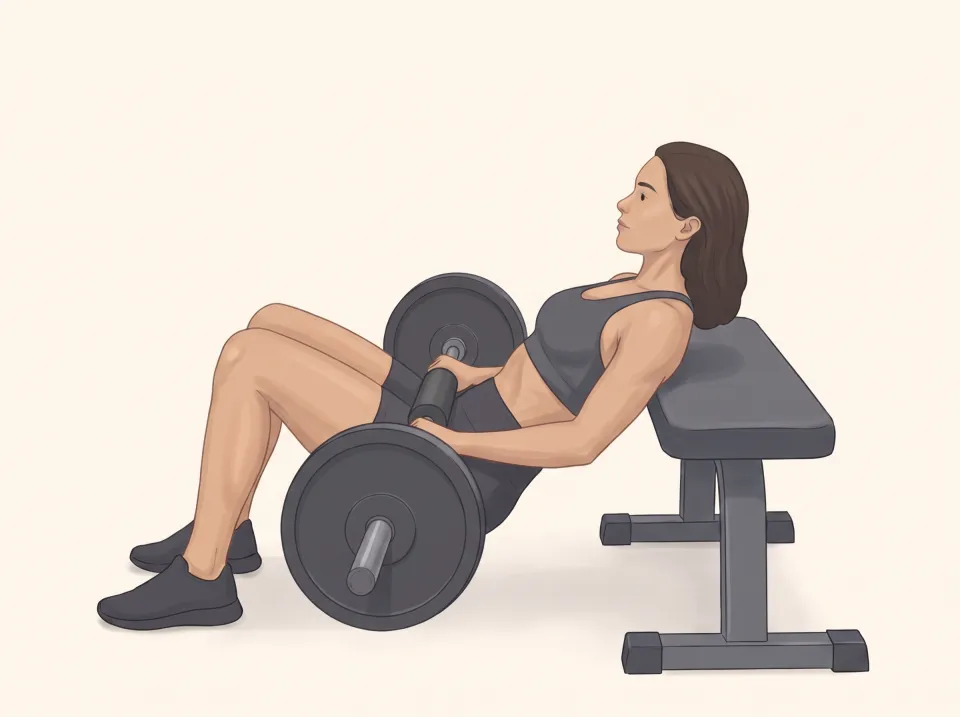
Bottom
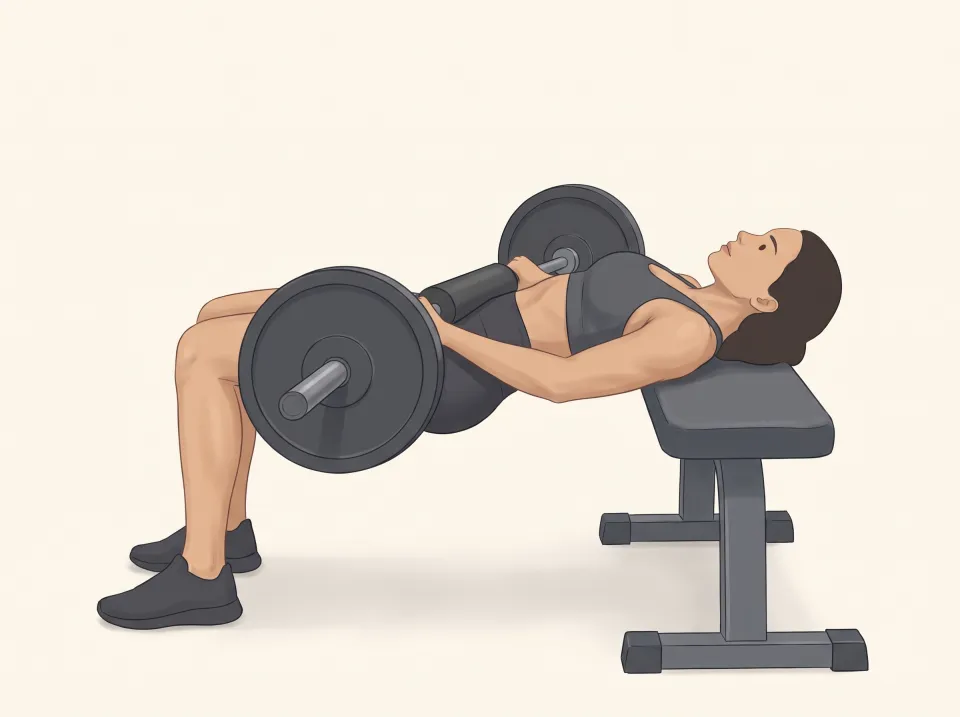
Lockout
Tension builds as the hips straighten and peaks at lockout.
Romanian deadlift Lengthened
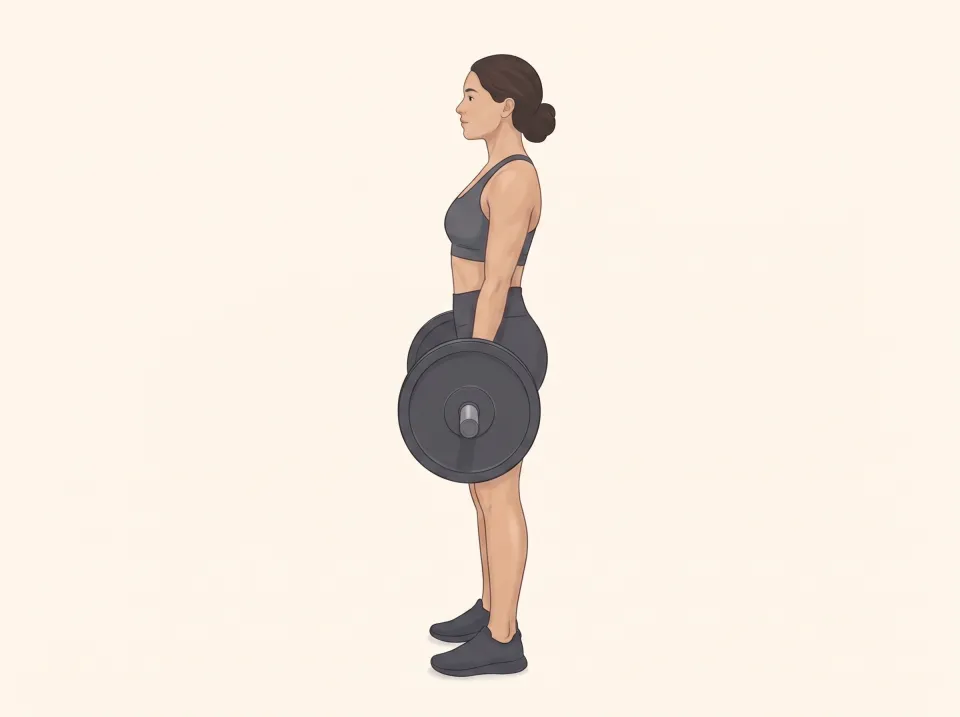
Standing
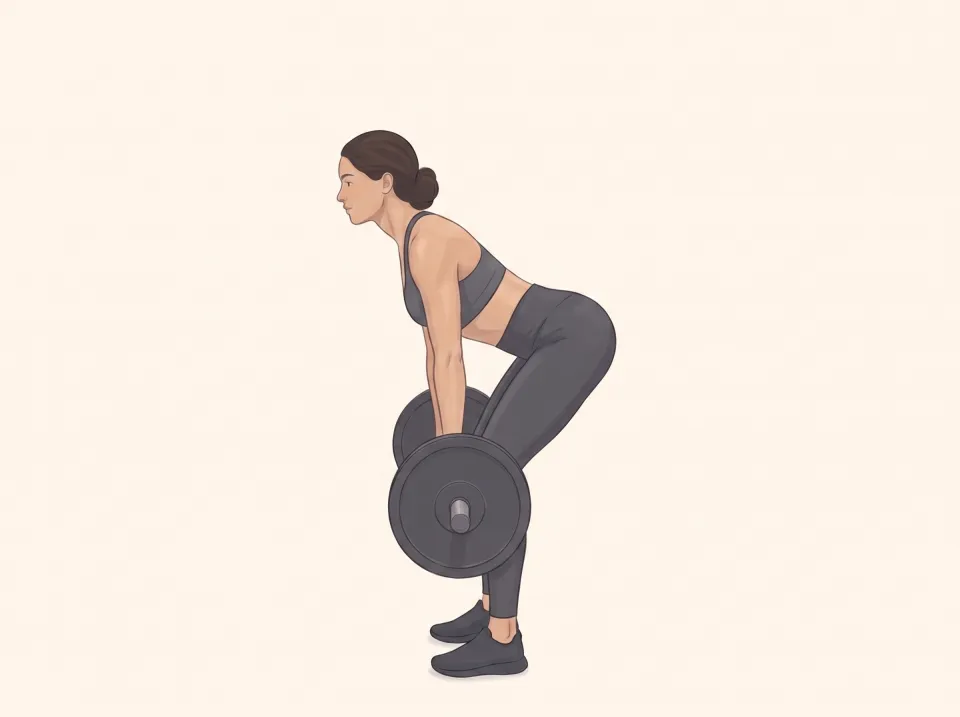
Bottom of the hinge
Tension builds as the hips bend and peaks at the bottom of the hinge.
| Hip thrust | Romanian deadlift | |
|---|---|---|
| Hardest point | Lockout, at the top | The bottom of the hinge |
| Hip angle when hardest | Roughly straight | Bent well forward |
| Glute length when hardest | Short, squeezed | Stretched |
| Easiest point | The bottom | Standing tall |
| Category | Shortened | Lengthened |
Two things change the answer:
- Cables and bands change category with setup. A cable pull-through anchored low puts more tension at the bottom of the hinge than a band anchored at hip height does.
- Free weights lose tension where the lever arm shrinks. That’s why the bottom of a squat is hard and the top, standing straight, is almost nothing.
Learning where you feel tension in each part of the rep is the Engage step of the S.H.E.L.F. Method I use across the site — once you can feel it, you can classify anything.
How to Program Both in One Week
The rule is simple: one lengthened lift and one shortened lift per glute session, lengthened first while you’re fresh. Deep hinges and split squats are the most tiring and the most form-sensitive, so they go before the squeeze work.
| Day | Exercise | Position | Sets × reps | Rest | Home swap |
|---|---|---|---|---|---|
| Day 1 | Romanian deadlift | Lengthened | 3 × 8 | 2 min | Band RDL with a 3-second lower |
| Day 1 | Barbell or dumbbell hip thrust | Shortened | 3 × 8–10 | 2 min | Banded glute bridge |
| Day 1 | Seated abduction | Shortened | 3 × 15 | 60 s | Banded seated abduction |
| Day 2 | Bulgarian split squat | Lengthened | 3 × 8 per leg | 2 min | Couch-elevated split squat |
| Day 2 | Glute bridge or frog pump | Shortened | 2 × 20 | 60 s | Same |
| Day 2 | Cable kickback | Shortened | 2 × 12 per side | 60 s | Banded kickback |
Only train glutes once a week? RDL 3×8, hip thrust 3×10 and seated abduction 3×15. Done.
Rep ranges: keep lengthened lifts around 6–10 reps so you can control the stretch, and shortened lifts around 8–20, where you can actually pause and squeeze at the top. Abduction and kickbacks are where my glute accessory exercises guide comes in. Never done an RDL or a Bulgarian split squat? Start with the beginner glute program.
Want this built around your actual week? Join the waitlist — the Glute Routine Builder puts both positions into your week, around the days, time and equipment you actually have.
Short vs Long Glutes: Insertions Are a Different Thing Entirely
“Shortened” and “lengthened” describe a position in a rep. “Short vs long glutes” describes your anatomy: how long the glute max’s muscle belly is and where it attaches.
The glute max starts at the back of your pelvis and sacrum and inserts into the IT band and a ridge on the back of your thigh bone — and where exactly those attachments sit varies a lot from person to person (StatPearls). That’s genetics. No exercise moves it.
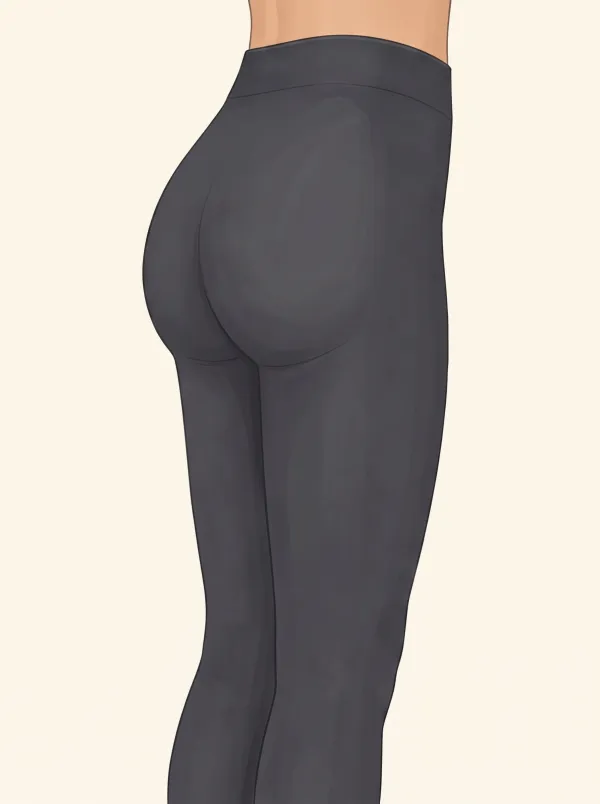
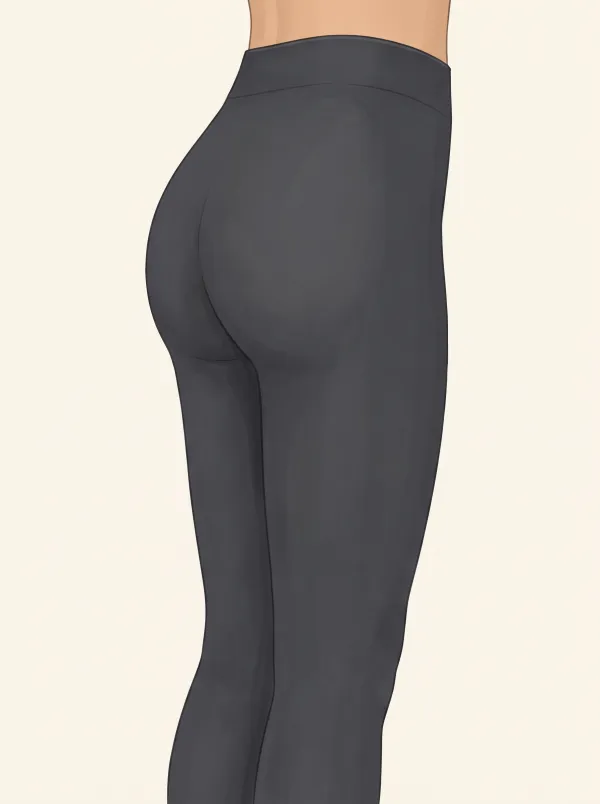
Short belly
- Where it meets the hamstring
- High crease, visible hamstring below
- Tends to look
- Higher and rounder, can look smaller
- Train more of
- Extra abduction and upper-glute work
Mid-length
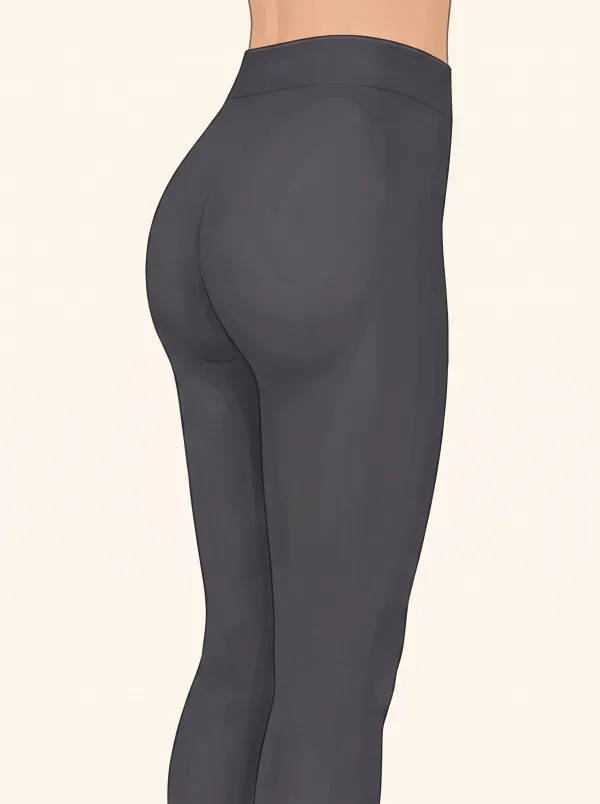
- Where it meets the hamstring
- Moderate blend
- Tends to look
- In between
- Train more of
- A balance of both
Long belly
- Where it meets the hamstring
- Smooth blend into the hamstring
- Tends to look
- Fuller and lower, one continuous curve
- Train more of
- Heavier hinge work for the glute-hamstring tie-in
How it tends to show up — and this is what coaches commonly describe, not something research has measured:
- Longer muscle bellies that attach lower tend to look fuller and blend smoothly into the upper hamstring.
- Shorter muscle bellies that attach higher tend to leave a clearer crease where the glute ends, with more visible hamstring below — often a higher, rounder shape that can look smaller.
How to tell which you have: stand relaxed and side-on in good light, and look at where the bottom edge of your glute meets your hamstring. A clear crease high up with a gap of hamstring below it points to shorter bellies. A smooth blend down into the hamstring points to longer ones. A side photo with your glutes flexed shows it best.
What it changes: shorter bellies often respond well to extra abduction and upper-glute work to round out the top and side; longer bellies benefit from heavier hinge work that builds the area where glute meets hamstring. Neither one changes the fact that you should train both positions.
What it doesn’t change: your insertions shape where growth shows up. Nothing suggests they stop you growing, and training can’t turn a short muscle belly into a long one. If you want to see what shape you’re working with, the glute shape quiz and the butt shapes guide are the next step.
When people search “glute lengthening exercises”, they usually mean one of two things. Either they mean loading the stretched position — the lengthened lifts above — or they mean stretching tight glutes for mobility, like a figure-4 stretch, the 90/90 stretch or pigeon pose. The first builds muscle. The second helps you move better. Neither makes the muscle itself longer.
Mistakes People Make With This
- Dropping hip thrusts because a reel said lengthened is better. Hip thrusts grew the glutes about as well as squats in a head-to-head study.
- Chasing depth you can’t control. Sinking into a Bulgarian split squat with your pelvis collapsing isn’t a better stretch — it’s a lower back problem.
- Half-rep hip thrusts once the weight gets heavy. That cuts out the top, which is the only part that was hard.
- Adding both positions on top of everything else instead of swapping exercises. More volume isn’t the goal; the right mix is.
- Treating lengthened partials as a replacement for full reps. Reps done only in the bottom half look promising, but they’re an occasional intensifier, not your whole program.
- Blaming insertions for a flat upper glute. That’s usually an untrained glute medius.
Quick Answers
What’s the difference between shortened and lengthened glute exercises?
Shortened exercises are hardest when your hips are extended and the glutes are squeezed (hip thrusts, bridges); lengthened exercises are hardest when your hips are deeply bent and the glutes are stretched (RDLs, deep squats, split squats).
What is the 888 glute method?
Most often it’s a hip thrust burnout from TikTok: 8 full-range hip thrusts, then 8 partial reps at the top, then an 8-second hold at lockout, all counted as one set (Mirafit). Every part of it sits in the shortened position. It’s a fine finisher, but a fixed formula loses to a routine built around your days, equipment and progress — and it gives you no lengthened work at all.
What are the top 3 glute exercises?
For most people: the hip thrust, the Romanian deadlift and the Bulgarian split squat. One shortened and two lengthened — which is the point.
What’s the number one glute exercise?
The hip thrust is the easiest way to load the glute max heavy and keep progressing. But the best glute exercise is the one you’ll do every week and keep adding weight to.
The Glute Routine Builder builds both positions into your week automatically — join the waitlist to get it first.