Apple Butt: Meaning, Shape and Exercises for a Rounder Butt
“Apple butt” is one of those fitness phrases that gets thrown around a lot, but nobody really stops to define it.
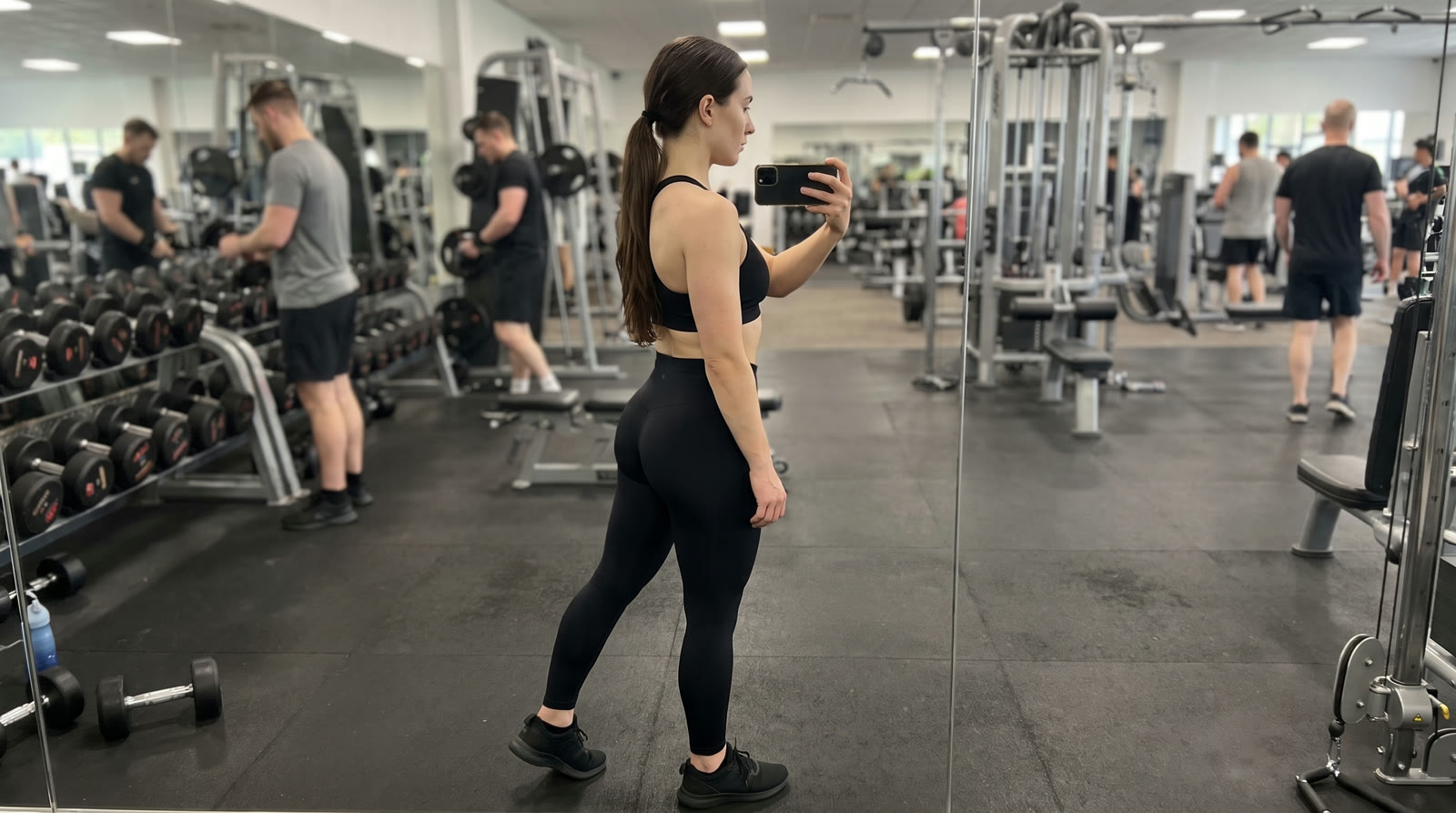
Usually, it means a butt that looks round, full, lifted, and firm.
Not a medical category.
Not a special glute type.
Not something you unlock after doing 300 banded kickbacks while staring into the middle distance.
It is just a casual phrase people use to describe a rounder glute shape.
Can you train for that look?
Sort of.
You can build bigger, stronger, firmer glutes with good training. You can improve muscle size, shape, projection, and how your glutes sit on your frame. But you cannot guarantee one exact butt shape, because genetics, pelvis structure, fat distribution, muscle insertions, and posture all matter too.
So the goal is not to chase a perfect “apple.”
The goal is to build your glutes with exercises that actually make sense.
What Does Apple Butt Mean?
An apple butt usually means a round, full, lifted butt shape.
It is similar to terms like:
- bubble butt
- round butt
- apple bottom
- full glutes
- lifted glutes
The phrase describes appearance, not anatomy.
Your glutes are made up of three main muscles: the gluteus maximus, gluteus medius, and gluteus minimus. These muscles help stabilize, balance, and control lower-body movement and posture. (my.clevelandclinic.org)
When people talk about an apple butt, they are usually talking about a visual shape that comes from a mix of:
- glute muscle size
- body fat distribution
- pelvis and hip structure
- posture
- genetics
- training history
That is why two people can do the same glute program and still end up with slightly different shapes.
Annoying?
Yes.
Normal?
Also yes.
People also use “peach butt” for the same idea — the peach butt workout covers the training side of that look.
Apple Butt vs Bubble Butt vs Apple Bottom
These terms are not scientific. They are casual body-shape phrases, and people often use them in similar ways.
| Term | What it usually means |
|---|---|
| Apple butt | Round, full, lifted butt shape |
| Bubble butt | Very round, prominent butt shape |
| Apple bottom | Round butt shape, often used in clothing or fit context |
The main thing to know is this:
Apple butt and bubble butt usually describe a rounder glute shape.
Apple bottom is often used more in a fashion or clothing-fit context.
None of these terms tell you exactly what your training should be.
For that, you need to look at the actual muscles and movements involved — which is what the glute shape quiz works out from four questions.
Can You Build an Apple Butt Shape?
You can build rounder, firmer glutes with strength training.
But you cannot guarantee an exact apple shape.
That is the honest answer.
Training can help improve:
- glute size
- glute firmness
- projection
- lower-body strength
- side-glute development
- the “lifted” look that comes from more muscle
But training cannot fully control:
- where your body stores fat
- your pelvis shape
- your bone structure
- your muscle insertions
- your natural body proportions
The main muscle people think of when they talk about a rounder butt is the gluteus maximus, which is the largest glute muscle and helps drive hip extension. The gluteus medius and minimus also matter because they help with hip stability, hip abduction, and the side-glute area. (health.clevelandclinic.org)
So if your goal is a rounder, firmer butt, your training should usually focus on:
- growing the glute max
- training the glute medius
- using progressive overload
- getting stronger in key glute exercises
- doing enough weekly volume
- recovering well enough to grow
Not just chasing a burn.
A burn is fine.
A burn is not a program.
Best Exercises for a Rounder, Firmer Butt
The best exercises for a rounder butt are usually the ones that let you train the glutes through different positions: heavy hip extension, loaded stretch, single-leg work, isolation, and side-glute work.
Several common lower-body exercises can produce high gluteus maximus activation, including hip thrusts, squats, deadlifts, and lunges, though activation is not the only thing that matters for growth. Load, range of motion, consistency, and progression still matter too. (pmc.ncbi.nlm.nih.gov)
Here are the exercises I would start with.
Hip Thrusts
Best for: glute size and projection
Hip thrusts are one of the most popular glute-building exercises for a reason.
They train hip extension hard, especially near the top of the movement where the glutes are squeezed. They are also easier for many beginners to feel in the glutes than squats or lunges.
Use hip thrusts when you want to build:
- glute size
- top-end contraction
- hip extension strength
- confidence loading the glutes
Simple cue: Keep your ribs down, control your pelvis, and finish the rep with your glutes. Do not turn the top into a lower-back arch competition.
Romanian Deadlifts
Best for: glute stretch and lower-glute development
Romanian deadlifts train the glutes in a lengthened position.
That means your glutes are loaded while your hips are flexed and pushed back. This is a very different stimulus from squeezing at the top of a hip thrust.
Use Romanian deadlifts when you want to build:
- glute and hamstring strength
- loaded stretch
- hip hinge control
- posterior-chain development
This fits the Hinge part of the S.H.E.L.F. Method: learning to move through the hips instead of turning every lower-body exercise into a knee-dominant squat.
Simple cue: Push your hips back. Keep the weight close. Stop when you cannot keep control.
Bulgarian Split Squats
Best for: single-leg glute growth
Bulgarian split squats are rude, but useful.
They train one leg at a time and can challenge the glutes through deep hip flexion, especially if you use a slightly longer stride and a controlled forward lean.
Use Bulgarian split squats when you want to build:
- single-leg strength
- glute size
- hip control
- left-right balance
- lower-body stability
Simple cue: Let the front hip bend. Lean slightly forward. Drive through the front foot.
Cable Kickbacks
Best for: glute isolation
Cable kickbacks are a good accessory exercise for directly targeting the glute max.
They should not replace your main lifts, but they can be useful after heavier work when you want extra glute volume and a more isolated contraction.
Use cable kickbacks when you want to build:
- glute isolation
- end-range hip extension
- single-leg control
- extra volume without as much fatigue
Simple cue: Keep your torso stable and move from the hip. If your whole body is swinging, the cable stack is not impressed.
Hip Abductions
Best for: upper and side-glute shape
Hip abductions train the side-glute area, especially the glute medius and glute minimus.
These muscles help with hip abduction and pelvic stability. Research and anatomy references consistently describe the gluteus medius and minimus as important for hip abduction and stabilizing the pelvis during lower-body movement. (pmc.ncbi.nlm.nih.gov)
Use hip abductions when you want to build:
- side glutes
- hip stability
- glute medius strength
- higher-rep accessory volume
Simple cue: Control the open and the return. Do not just fling the pads out and let gravity write the rest of the rep.
Step-Ups
Best for: glute-focused single-leg strength
Step-ups can be very useful for glute growth when you set them up well.
A higher box, slight forward lean, and controlled drive through the working leg can help make the movement more glute-focused.
Use step-ups when you want to build:
- single-leg strength
- glute control
- hip stability
- coordination
- bottom-to-top power
Simple cue: Let the front leg do the work. Do not launch off the back foot like it has a personal vendetta.
Simple Apple Butt Workout
Here is a simple glute-focused workout that uses heavy work, stretched-position work, single-leg work, isolation, and side-glute training.
| Exercise | Sets | Reps |
|---|---|---|
| Hip thrust | 4 | 8 to 10 |
| Romanian deadlift | 3 | 8 to 10 |
| Bulgarian split squat | 3 | 10 per side |
| Cable kickback | 3 | 12 to 15 per side |
| Hip abduction | 3 | 15 to 25 |
Do this workout 2 times per week with at least one rest day between sessions, and progress slowly by adding reps, weight, or better control over time.
You do not need to change everything every week.
Actually, please do not.
Pick the lifts. Learn the setup. Track your reps. Add load or control when you can. Stay with it long enough for your body to respond.
That is the boring part people skip.
It is also the part that works.
FAQs About Apple Butt
What does apple butt mean?
Apple butt usually means a round, full, lifted butt shape.
It is a casual appearance-based phrase, not a medical or anatomical category.
Is an apple butt the same as a bubble butt?
They are similar terms.
Apple butt usually describes a round, lifted shape. Bubble butt usually describes a very round or prominent butt shape.
People often use them in similar ways, but neither term has a strict scientific definition.
Can you get an apple butt from exercise?
You can build rounder, firmer glutes with strength training, but you cannot guarantee one exact shape.
Exercise can grow the glute muscles and improve firmness, projection, and strength. But genetics, bone structure, fat distribution, and posture also affect how your glutes look.
What exercises make your butt rounder?
Good exercises for building a rounder butt include:
- hip thrusts
- Romanian deadlifts
- Bulgarian split squats
- cable kickbacks
- hip abductions
- step-ups
- lunges
- glute bridges
For best results, use a mix of main lifts and accessory exercises instead of relying on one movement.
How long does it take to build a rounder butt?
Most people need months of consistent training to see noticeable glute growth.
A few weeks may help you feel stronger, more coordinated, and more connected to the exercises. But visible muscle growth usually takes longer — here’s how long it takes to grow glutes, week by week.
Think in terms of months, not days.
And definitely not one viral workout.
Final Takeaway
An apple butt is just a casual way to describe a round, full, lifted butt shape.
You can train for rounder, firmer glutes, but you cannot force your body into one exact shape. Genetics, structure, fat distribution, and posture all matter.
What you can do is train your glutes well.
Use hip thrusts for heavy hip extension.
Use RDLs for the loaded stretch.
Use Bulgarian split squats and step-ups for single-leg strength.
Use kickbacks and abductions for extra targeted work.
Then follow through.
Not for one week.
Not until the next trend shows up.
Long enough for your training to actually have a chance.
That is how you build the shelf.