Butt Shapes: The 6 Types, and How to Tell Which One You Have
There are six butt shapes people actually mean when they say this: round, heart, square (H), V, A (pear), and flat. They’re appearance labels, not anatomy categories — each one comes down to three things: how much gluteus maximus you carry in the middle and lower glute, how much gluteus medius fills the upper-outer hip, and where your pelvis and fat distribution put it all.
Find the silhouette in the chart below that looks most like your back and side view, and you’ll get the one thing your shape is usually missing and the lifts that build it. Your skeleton sets the frame. Everything inside that frame is trainable, and most people are only ever training half of it.
The 6 Butt Shapes, in One Chart
Booty shapes, bum shapes, ass types, glute shapes, types of buttocks — they’re all describing the same six things. Different words, same map. Look at both views for each one: width shows from the back, but projection only shows from the side.
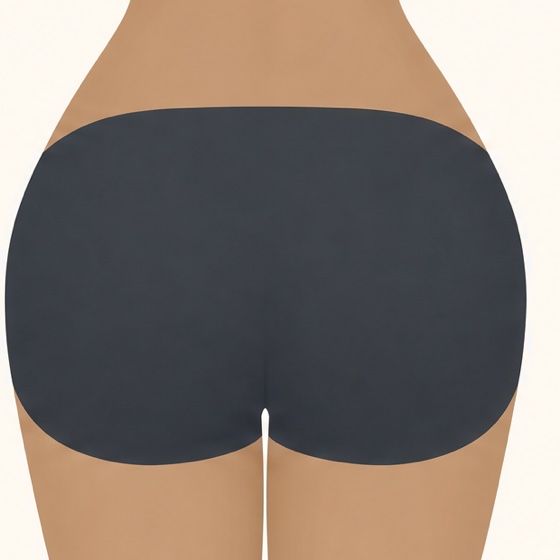
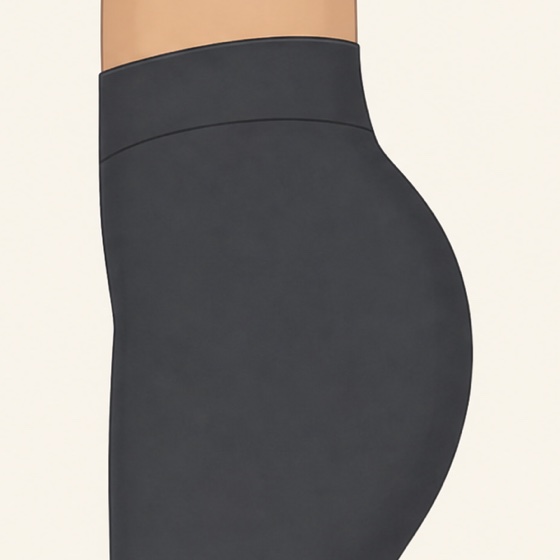
Round
Also called apple, bubble or peach
Even fullness from top to bottom, with clear projection from the side.
Usually missing Nothing major — train for size.
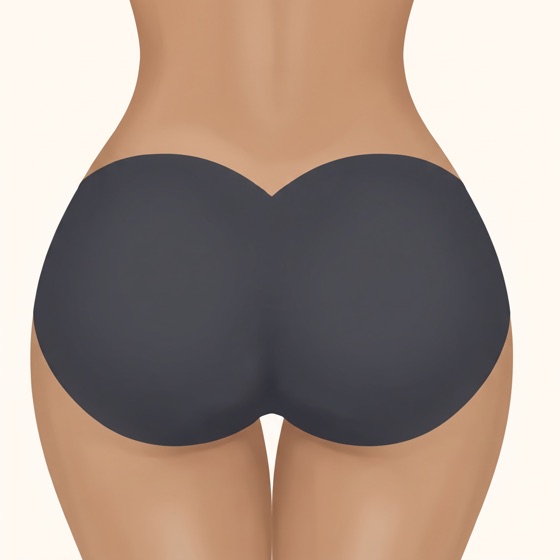
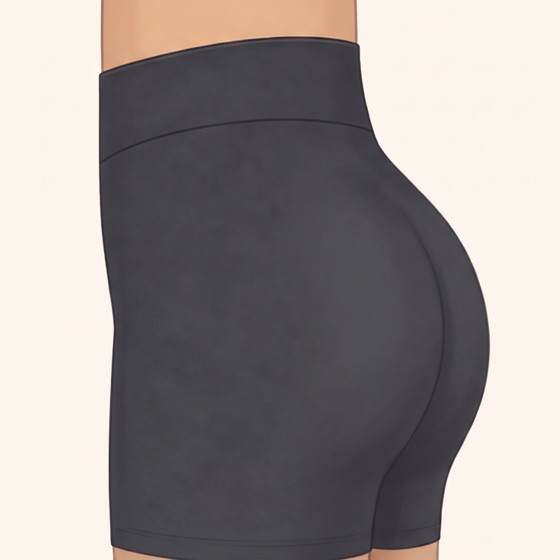
Heart
Also called upside-down heart
A clear waist pinch, widest in the lower half of the glutes, then curving back in toward the thighs.
Usually missing Usually balanced — build the upper glute for the shelf.
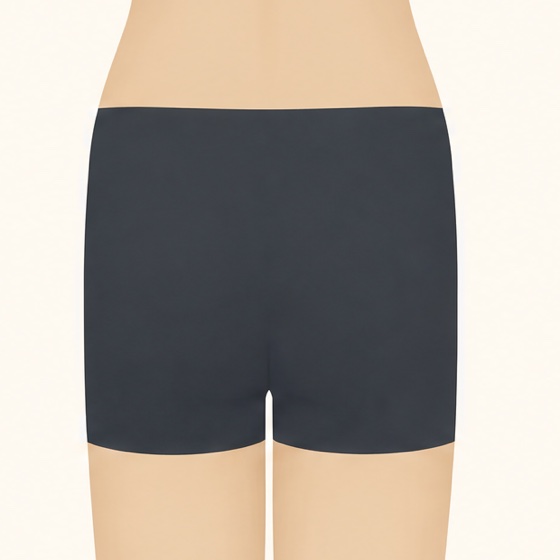
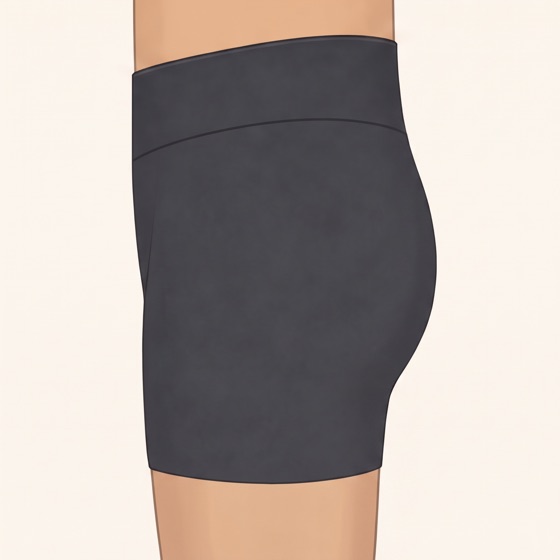
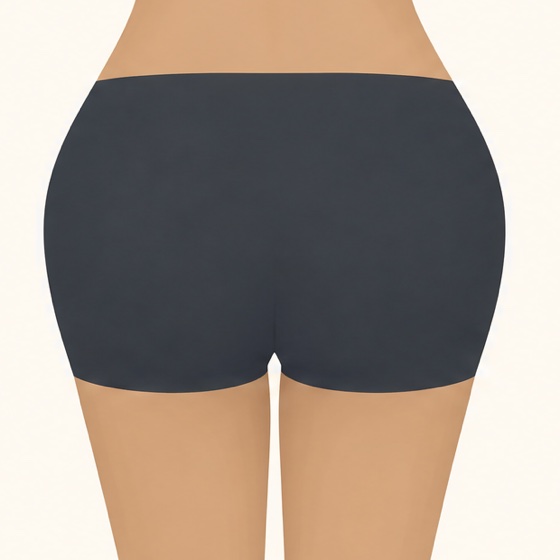
Square
Also called H-shape or straight
A straight line from waist to hip, often with a dip at the upper-outer hip.
Usually missing Glute medius — it sits above the upper-outer hip and softens the dip.
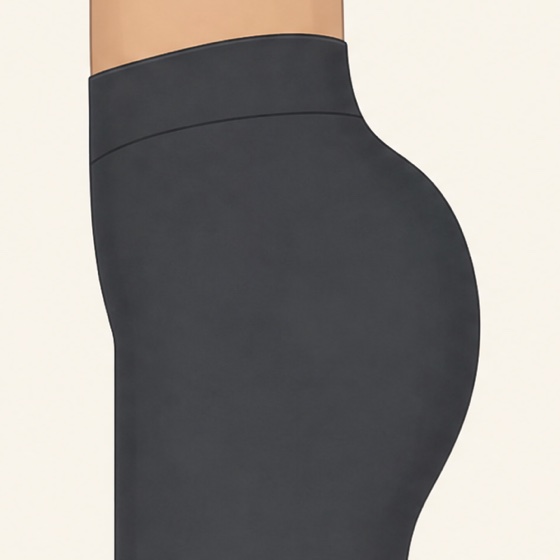
V-shape
Also called inverted V
Widest up near the hip bones, tapering narrower toward the lower glute.
Usually missing Lower glute max — fullness down low.
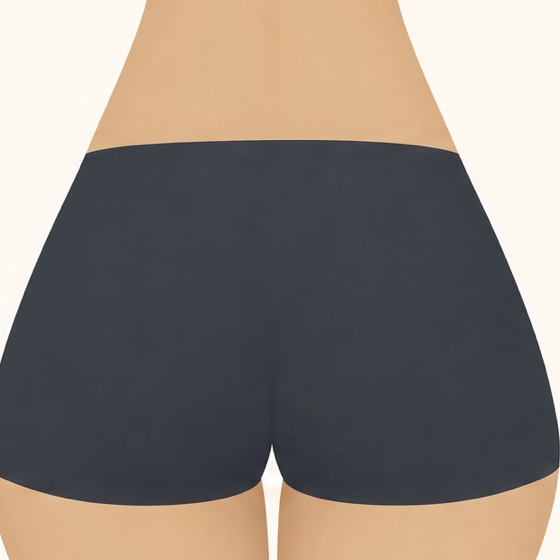
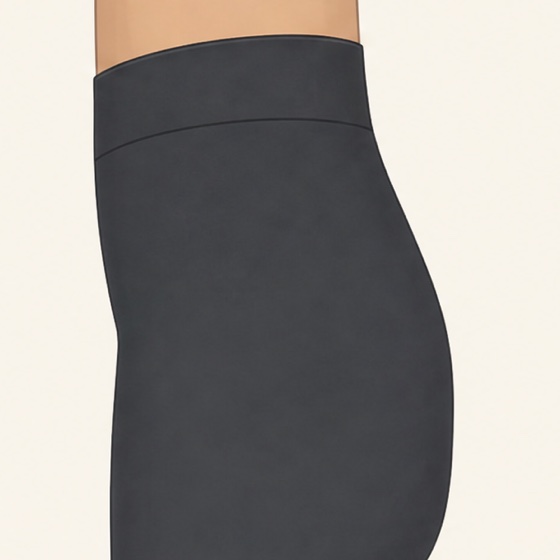
A-shape
Also called pear — some charts group it with heart
Narrow at the top, widest at the lower glute and upper thigh.
Usually missing Upper glute and glute medius.
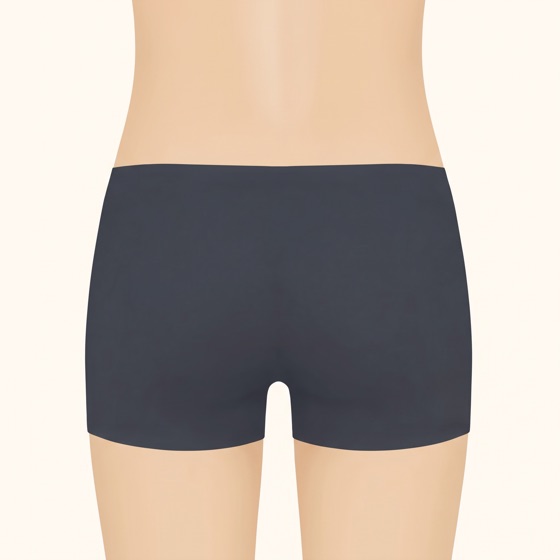
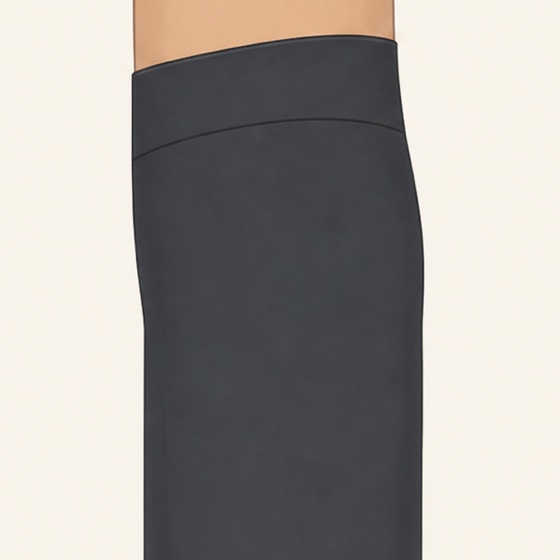
Flat
Little curve from any angle
Minimal projection from the side and little contrast between waist and hips.
Usually missing Overall glute max volume.
Two things before you pick one. These are descriptive labels, not medical categories, and almost nobody is purely one shape — most people are a blend of two. The blend still tells you what to train. And shape is separate from size: if you want to know how your measurement compares with other women, the butt size chart has the numbers.
How to Tell Which Butt Shape You Have
Take two photos: one from the back and one from the side. Stand tall and relaxed — no flexing, no arching — in fitted shorts or leggings, in the same light, with the phone at hip height. Then answer four questions:
- Where is your widest point? Above the middle of your glutes (near your hip bones), right at the middle, or below it (near the top of your thighs)?
- What does the line from your waist to your hip do? Curve out clearly, or run fairly straight down?
- From the side, do your glutes project past the line of your lower back? Clearly, a little, or barely?
- Standing relaxed, is there a dip at your upper-outer hip, just below the hip bone?
Here’s how the answers map to a shape:
| What you see | Your likely shape |
|---|---|
| Widest at the middle, a clear curve out, clear projection, no dip | Round |
| Widest low, a narrow waist above it, strong projection | Heart |
| A straight line from waist to hip, a dip at the upper-outer hip | Square |
| Widest high near the hip bones, narrowing toward the lower glute, flatter low from the side | V-shape |
| Narrow up top, widest at the lower glute and upper thigh, flatter up top from the side | A-shape |
| Little projection, little curve from waist to hip | Flat |
If you’d rather click than squint at photos, the glute shape quiz runs the same checks in four questions and tells you what to train. (For your overall body shape — hourglass, pear, rectangle — use the body type calculator.) And if you want to see proportions rather than read about them, the female body visualizer shows a body at your height and weight before and after glute training.
One more variable that sits apart from shape: high butt vs low butt. Where your glute mass sits relative to your hip bone is set by your pelvis and muscle attachments. High-set glutes tend to look rounder at the same amount of muscle. Low-set glutes respond well to upper-glute and glute medius work, which fills in the area above them.
What Actually Causes Your Butt Shape
Your glutes are three muscles. The gluteus maximus is the largest and sits closest to the surface; it extends the hip, and it’s the one behind projection and lower-glute fullness. The gluteus medius sits higher and to the side, with the smaller gluteus minimus underneath it; together they move the thigh out to the side and rotate it (Cleveland Clinic). The medius is the one you see in the upper-outer curve. Your shape is how much of each you’ve built, sitting on a frame you were born with.
| This part of your shape | Comes from |
|---|---|
| Projection from the side, lower-glute fullness | Gluteus maximus |
| The upper-outer curve and the “side shelf” | Gluteus medius (with the minimus underneath) |
| Overall width, and the dip at the upper-outer hip | Your bone structure — fixed |
Some of that you can change and some you can’t:
| Fixed | Trainable |
|---|---|
| Pelvis width and shape | Glute max size |
| Hip bone and thigh bone position | Glute medius and minimus size |
| Muscle insertion points | Side projection |
| Bone length | Lower-glute fullness |
| Where your body stores fat first | Firmness |
| Body fat level and posture |
Almost nobody is at the limit of the right-hand column.
Why a V shape happens: fat carried around the waist and upper hips rather than on the glutes, plus a lower glute max that hasn’t caught up. All the fullness sits high, so the shape tapers. It becomes more common with age: as estrogen drops around menopause, fat tends to shift from the butt toward the midsection (Healthline).
Why a square shape happens: a straighter line from waist to hip, often with a dip at the upper-outer hip. That dip is mostly bone structure — it’s the gap between the top of your pelvis and the bony point at the top of your thigh bone — so no exercise erases it. The glute medius sits right above it, though, and building that muscle can soften the dip and add curve to the line (The Conversation).
Training can’t give you someone else’s skeleton. But it can build out everything your skeleton is holding, and that’s most of what people are actually looking at.
Can You Change Your Butt Shape? What Training Actually Moves
Yes — partly, and more than most people expect.
Training changes: projection, lower-glute fullness, the upper-outer curve, firmness, and how high your glutes look.
Training doesn’t change: pelvis width, where your hip bones sit, or where your body stores and loses fat first (Healthline).
It takes three things: progressive overload (adding weight or reps over the weeks), two to three glute sessions a week — training a muscle at least twice a week grows it better than once (Schoenfeld, Ogborn and Krieger, 2016) — more on that in how often to train glutes — and enough protein and calories to build muscle. Training the glutes through a long range of motion matters too — I break that down in shortened vs lengthened glute exercises.
Nobody goes from flat to bubble in 30 days, and anyone promising that is selling something. Here’s what an honest timeline looks like:
- Weeks 1–4: strength goes up and soreness settles. No visible change yet — early strength gains come mostly from your nervous system learning the lifts, with muscle growth taking over after the first few weeks (Moritani and deVries, 1979). This is normal, and it’s working.
- Weeks 4–8: things feel firmer, the side profile changes slightly, and your hip thrust and RDL weights climb noticeably.
- Weeks 8–12: the first change you can see in a side-by-side photo.
- Months 6–12: a shape change other people notice.
These are typical ranges, not promises — beginners tend to see change sooner — and they assume two to three glute sessions a week, more load or reps most weeks, and enough protein and calories. Here’s the full glute growth timeline.
What to Train for Your Shape
Every glute routine needs four movement patterns: a thrust (hip thrusts, bridges), a squat or lunge, a hinge (RDLs, back extensions), and abduction (moving the leg out to the side). Your shape decides which of those gets the most attention.
| Shape | Also called | Main muscle gap | Top 3 exercises | Sets × reps |
|---|---|---|---|---|
| Round | Apple, bubble, peach | None — balanced | Hip thrust, RDL, Bulgarian split squat | 4×8–10, 3×8–10, 3×10/leg |
| Heart | Upside-down heart | Upper glute | Hip thrust, seated abduction, step-up | 4×8–10, 3×20, 3×10/leg |
| Square | H-shape, straight | Glute medius | Seated abduction, cable kickback, hip thrust | 3×20, 3×12/leg, 4×8–10 |
| V-shape | Inverted V | Lower glute max | Hip thrust, RDL, back extension | 4×8–10, 3×8–10, 3×12 |
| A-shape | Pear | Upper glute, glute medius | Seated abduction, Bulgarian split squat, banded hip thrust | 3×20, 3×10/leg, 4×8–10 |
| Flat | — | Overall glute max | Hip thrust, RDL, Bulgarian split squat | 4×8–10, 3×8–10, 3×10/leg |
In more detail:
- Square: load abduction hard — seated abductions, cable kickbacks angled slightly outward, side-lying abduction — then add hip thrusts for overall size. My glute accessory exercises guide covers the abduction work.
- V-shape: build the lower glute through hip extension — hip thrusts, RDLs, glute-biased back extensions and step-ups.
- A-shape: focus on the upper glute and glute medius — seated abductions, Bulgarian split squats, and hip thrusts with a band above your knees.
- Flat: volume on the basics. Barbell or dumbbell hip thrusts, RDLs and Bulgarian split squats, with frog pumps as a finisher.
- Heart: the low fullness is already there, so put the extra work into the upper glute — seated abductions and step-ups — alongside heavy hip thrusts.
- Round: you’re already balanced, so train for size and keep adding weight.
For sets and reps: 3–4 sets of 8–15 reps on the big lifts, 15–25 reps on abduction work, two to three sessions a week.
A 3-Day Glute Week You Can Actually Run
| Day | Exercises |
|---|---|
| Day 1 | Hip thrust 4×8–10 · Bulgarian split squat 3×10/leg · Seated abduction 3×20 |
| Day 2 | Romanian deadlift 4×8 · Step-up 3×10/leg · Glute bridge 3×15 |
| Day 3 | Glute-biased back extension 3×12 · Cable kickback 3×12/leg · Side-lying abduction 3×20 |
Add 2.5–5 lb or one rep to a lift whenever you hit the top of its rep range with good form. Training at home? Swap the hip thrust for a banded glute bridge off the couch, the RDL for a dumbbell or single-leg RDL, and the machine abduction for a seated band abduction.
New to lifting? The beginner glute program walks you in more gently. Want a short structured start right now? Try the 30-day glute challenge.
Know your shape? Join the Build The Shelf waitlist and the Glute Routine Builder will build your week around it — your days, your time, your equipment — with progress photos stored privately so you can see the shape actually change.
Is There a “Best” Butt Shape?
Research hasn’t rated shape labels directly, but round and heart shapes have the three features that rate highest when people are surveyed: contrast between the waist and the hips, fullness centred on the glutes, and projection from the side. The best-known study, Devendra Singh’s 1993 research, found figures with a waist-to-hip ratio of around 0.7 were rated most attractive. I went through the research in what the most attractive butt shape actually is.
That’s a measured average preference, not a standard you owe anyone. The only reason it’s useful is that it shows which parts come from structure and which come from training — and both trainable parts are the glute max and glute medius.
No shape is a defect. A square or V shape with well-built glutes beats a “round” shape with no muscle behind it.
Butt Shape Questions
What are the four types of buttocks?
The four-type charts you see online usually mean round, square, V, and heart — with heart and A-shape treated as the same thing. I use six because I split them (a heart has a narrow waist and strong projection; an A-shape carries its width low with a flatter top) and add flat, one of the most common shapes and the one those charts leave out.
How do I tell what glute shape I have?
Take a back photo and a side photo, then run the four checks above: where your widest point is, whether your waist-to-hip line curves or runs straight, how far your glutes project from the side, and whether there’s a dip at your upper-outer hip. Or take the glute shape quiz.
What causes a V-shaped bum?
Fat stored around the waist and upper hips rather than on the glutes, plus an underdeveloped lower glute max. It gets more common after menopause, when fat tends to shift toward the midsection. The muscle side is trainable with hip extension work — hip thrusts, RDLs and back extensions.
Does underwear change your butt shape?
It changes the look, not the shape. Lifting cuts and shapewear move where things sit; they don’t add muscle. Nothing wrong with that, as long as you know which one you’re doing.
Can you have a different shape on each side?
Yes. Mild asymmetry is normal. Single-leg work — Bulgarian split squats, step-ups, single-leg hip thrusts — helps even it out.
Does body fat change your butt shape?
Yes. Gaining or losing fat changes how your shape looks without changing the muscle underneath. Where you gain or lose it first is set mostly by genetics and hormones, and you can’t target it with exercise.