How to Fix an Inverted V-Shaped Butt
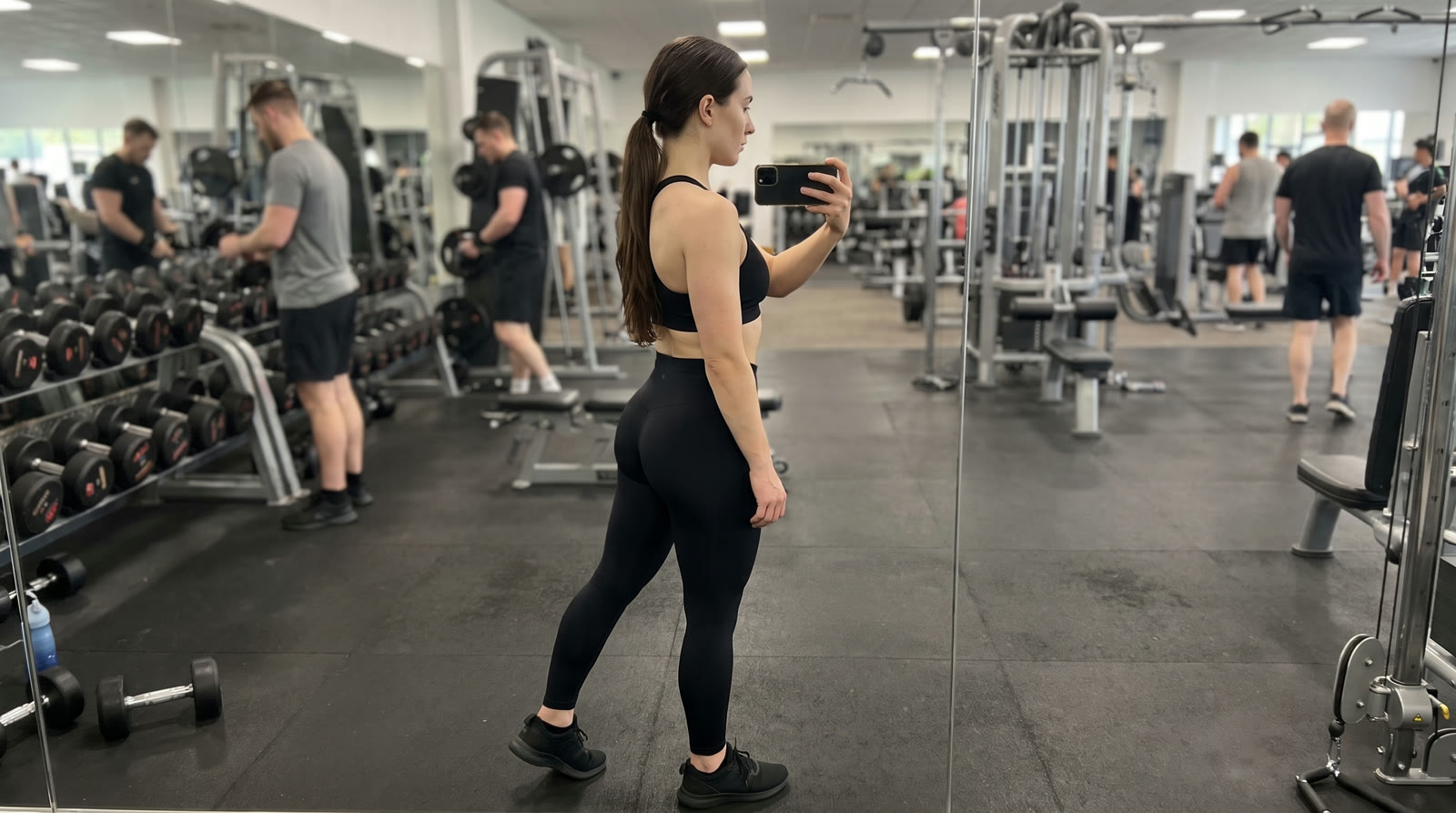
If you have an inverted V-shaped butt, your glutes probably look fuller up top and narrower toward the bottom.
From the back, it can look like your butt tapers down instead of looking round, full, or balanced. Some people describe it as an upside-down triangle or upside-down tree shape.
You probably are not looking for a long anatomy lesson. You want to know what to do about it.
The simple answer is this: build your glute max.
That is the main muscle that gives your butt more size, fullness, projection, and roundness. If the lower part of your glutes looks narrow or underdeveloped, you do not need 20 random Instagram exercises. You need the right movements, good form, consistency, and enough food to support growth.
Quick Answer: How Do You Fix an Inverted V-Shaped Butt?
To improve an inverted V-shaped butt, focus on building the glute max while adding enough side-glute work to round out the shape.
Use these four movement patterns:
- Thrust variation
- Squat or lunge variation
- Hinge or pull variation
- Abduction variation
If you want to keep it even simpler, start with two main exercises:
Exercise 1: Hip thrust or glute bridge Exercise 2: Step-up or lunge variation
Go heavy with good form, progress over time, and eat enough to build muscle.
That is the plan.
What Is an Inverted V-Shaped Butt?
An inverted V-shaped butt usually means you have more fullness around the upper hips and less fullness toward the lower glutes.
That can make the glutes look wider at the top and narrower at the bottom.
Some people call this:
- V-shaped butt
- inverted triangle butt
- tapered butt
- narrow lower glutes
- upside-down tree shape
These are just appearance terms. They are not medical categories. It is one of the common butt shapes, and it responds well to training. An inverted V and an A-shape are easy to mix up in a mirror, so if you are torn between them, take the shape quiz first.
Your shape can come from genetics, pelvis structure, fat distribution, posture, body fat, and how much glute muscle you have built.
Why You Might Have an Inverted V-Shaped Butt
There are two big reasons this shape can happen.
1. You Need More Glute Max Muscle
This is the main one.
If you have not built much muscle in your glute max, your butt may not have the lower fullness, projection, or roundness you want.
That does not mean anything is wrong with you. It just means your training needs to focus on building more glute muscle.
2. You May Carry More Body Fat Around Your Hips
Some people naturally carry more body fat around the hip area. That can make the upper hip area look fuller while the lower glutes look less developed.
This does not mean you need to panic or crash diet. It just means body fat distribution can affect how your glutes look.
The best approach is still simple: build muscle, train consistently, eat well, and give your body time to change.
The Main Muscle to Focus On
For an inverted V-shaped butt, focus on the glute max first.
The glute max gives your butt most of its size, fullness, and projection. The glute medius still matters because it helps with side-glute shape, but it is not the main answer here.
Think of it like this:
The glute max builds the butt.
The glute medius helps shape the sides.
You want both, but the glute max is the priority. If you want the deeper explanation of how glutes actually grow, start there.
The Best Exercises for an Inverted V-Shaped Butt
You do not need a huge list of exercises. Pick one movement from each category and get better at it.
1. Thrust Variation
This is your hip thrust or glute bridge pattern.
Good options:
- hip thrust
- glute bridge
- Smith machine hip thrust
- machine hip thrust
This is the main place to start because it trains the glute max directly.
If you have a bench, do hip thrusts. If you do not, do glute bridges from the floor. Use a dumbbell, barbell, Smith machine, or machine if you have one.
Simple cue: Keep your ribs down, control your pelvis, and finish the rep with your glutes.
2. Squat or Lunge Variation
This is your deeper glute movement.
Good options:
- step-up
- reverse lunge
- Bulgarian split squat
- Smith machine deficit lunge
For most beginners, I would start with step-ups. They are simple, easy to understand, and really good for glutes when you do them right.
Simple cue: Make the working leg do the work. Do not bounce off the back foot.
3. Hinge or Pull Variation
This trains the glutes in a stretched position.
Good options:
- Romanian deadlift
- dumbbell RDL
- cable pull-through
- glute-biased back extension
You do not have to start here on day one, but if you want a more complete glute plan, this is one of the main patterns to add.
Simple cue: Push your hips back, keep the weight close, and control the movement.
4. Abduction Variation
Abductions train the side glutes.
Good options:
- seated hip abduction
- cable hip abduction
- side-lying abduction
- banded lateral walk
These are a good add-on, not the whole workout. For more options here, see our guide to glute accessory exercises.
Simple cue: Control the rep. Do not just swing your legs around.
The Simple Version: Start With Two Exercises
If you are overwhelmed, start with two exercises:
- Hip thrust or glute bridge
- Step-up or lunge variation
That is enough to start.
You do not need to max out. You do not need to destroy yourself. You need to train hard, control the reps, and get stronger over time.
Simple works if you actually do it.
Simple Inverted V-Shaped Butt Workout
If you want the simple beginner version, do this 2 times per week.
| Exercise | Sets | Reps | Focus |
|---|---|---|---|
| Hip thrust or glute bridge | 3 to 4 | 8 to 12 | Glute max size and projection |
| Step-up | 3 to 4 | 8 to 12 per side | Single-leg glute growth |
If you want the more complete version, use all four movement patterns.
| Movement Pattern | Exercise | Sets | Reps |
|---|---|---|---|
| Thrust | Hip thrust or glute bridge | 3 to 4 | 8 to 12 |
| Squat/Lunge | Step-up | 3 to 4 | 8 to 12 per side |
| Hinge/Pull | Romanian deadlift | 3 | 8 to 10 |
| Abduction | Seated hip abduction | 2 to 3 | 15 to 25 |
You do not need 20 exercises. This already covers the main things your glutes need.
How Often Should You Train Glutes?
Train glutes 2 to 3 times per week.
If you are new, start with 2 days per week. If you recover well and want more volume, move to 3 days.
But do not build your whole plan around hour-and-a-half workouts if you cannot stick to that.
If you only have 20 or 30 minutes, use 20 or 30 minutes.
A short workout you actually repeat is better than the perfect workout you quit after two weeks.
Consistency is the thing.
2-Day Glute Plan for an Inverted V-Shaped Butt
Day 1
| Exercise | Sets | Reps |
|---|---|---|
| Hip thrust or glute bridge | 4 | 8 to 12 |
| Step-up | 3 | 8 to 12 per side |
| Hip abduction | 3 | 15 to 25 |
Day 2
| Exercise | Sets | Reps |
|---|---|---|
| Romanian deadlift | 3 | 8 to 10 |
| Hip thrust or glute bridge | 3 | 10 to 12 |
| Step-up | 3 | 8 to 10 per side |
3-Day Glute Plan for an Inverted V-Shaped Butt
Day 1: Thrust and Step-Up
| Exercise | Sets | Reps |
|---|---|---|
| Hip thrust or glute bridge | 4 | 8 to 12 |
| Step-up | 3 | 8 to 12 per side |
| Hip abduction | 3 | 15 to 25 |
Day 2: Hinge and Glute Max
| Exercise | Sets | Reps |
|---|---|---|
| Romanian deadlift | 3 to 4 | 8 to 10 |
| Glute-biased back extension | 3 | 10 to 15 |
| Cable kickback | 3 | 12 to 15 per side |
Day 3: Short Glute Day
| Exercise | Sets | Reps |
|---|---|---|
| Hip thrust or glute bridge | 3 | 10 to 12 |
| Step-up | 3 | 8 to 10 per side |
| Seated hip abduction | 3 | 15 to 25 |
You can still get a good workout in 30 minutes. You just need to stop wasting time and stop adding exercises just because you saw them online.
Nutrition Matters Too
You have to eat right if you want to grow your glutes.
Training tells your glutes to grow. Food gives your body what it needs to actually build the muscle.
A simple protein target is around 0.7 grams of protein per pound of body weight.
So if you weigh 150 pounds, that is around 105 grams of protein per day.
You do not have to force 1 gram per pound if that feels like too much. Around 0.7 grams per pound is a solid place to start.
Also, do not be scared of carbs. Think of it like building a house. Protein is the bricks. Carbs are the builders that help put the bricks in place.
You need both.
If you are training hard but barely eating, your body may not have enough resources to grow your glutes. For more on eating to support growth, see our nutrition guides.
Common Mistakes With an Inverted V-Shaped Butt
Doing Too Many Exercises
Do not take every glute exercise you see on Instagram and throw it into one workout.
Pick the main movements: thrust, squat or lunge, hinge or pull, and abduction. Get better at those.
Avoiding Heavy Glute Work
If you want to build your glutes, you need to challenge them.
That does not mean ego lifting with terrible form. It means using enough weight to make the set hard while still controlling the movement.
Go heavy with good form. Simple.
Only Doing Abductions
Abductions can help with side-glute shape, but they are not enough by themselves.
If your lower glutes look narrow or underdeveloped, you need glute max work.
Not Staying Consistent
If you cannot go to the gym for an hour and a half, do not try to build your whole plan around that.
Go for 20 minutes. Go for 30 minutes. Get your main work done and leave.
A workout you can repeat is better than a “perfect” workout you never stick to.
Not Eating Enough
If you want to grow muscle, you need enough food. You need protein, carbs, and enough total calories to support the goal.
You cannot build a bigger butt out of nothing.
Final Takeaway
If you have an inverted V-shaped butt, it usually means you have more fullness up top and less fullness down below.
The fix is building your glute max, staying consistent, and eating enough to grow.
Start with a hip thrust or glute bridge. Add a step-up or lunge variation. If you want the full plan, use the four main movements: thrust, squat or lunge, hinge or pull, and abduction.
Go heavy with good form. Train 2 to 3 times per week. Eat enough protein and carbs. And if you only have 20 or 30 minutes, use that. Consistency beats the perfect plan you never follow.
That is how you build more fullness, more roundness, and a better shelf.