Barbell Hip Thrust
- Targets the gluteus maximus, with help from the hamstrings, adductors and quads
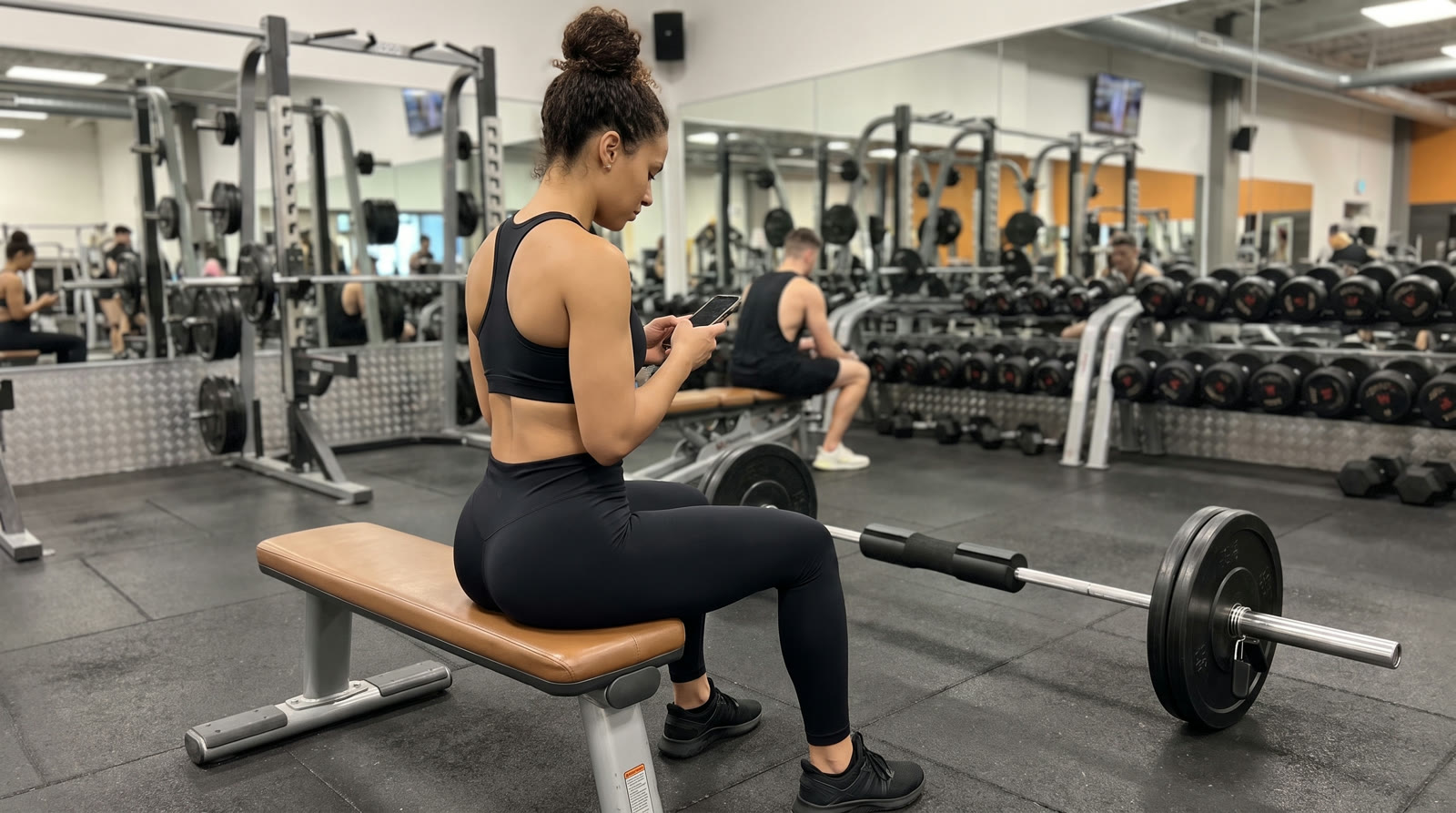
- Requires a barbell, a flat bench and a barbell pad
- Beginner friendly once the setup is dialled in
- Hardest at the top of the rep, which is where squats and hinges go easy
- Easy to load and progress, which is what actually drives results
How to Do a Barbell Hip Thrust
- Set up against the bench. Sit on the floor with your upper back against the long edge of a flat bench. The edge should sit just under your shoulder blades.
- Load the bar across your hips. Roll the barbell over your legs until it sits in your hip crease. Use a pad. Set your feet flat and about hip-width apart, far enough out that your shins will be vertical at the top.
- Drive up and squeeze. Tuck your chin, push through your heels, and lift until your torso and thighs form a straight line. Hold the squeeze for a beat, then lower under control until your hips are just above the floor.
Technique Cues
Ribs down. At the top, your lower back will try to finish the rep for you. Keep your ribcage pulled toward your hips so the extension comes from the hips instead.
Chin tucked, eyes forward. Your head travels with your torso. Throw your head back and your lower back usually follows.
Weight through the heel, toes down. If your heels lift, your feet are too far forward.
Stop at straight. Full hip extension is a straight line from knee to shoulder. There is no bonus for going past it.
Common Mistakes
| Mistake | Fix |
|---|---|
| Arching the lower back at the top | Lighter weight, ribs down |
| Knees drifting past the ankles | Move your feet further out |
| Feeling it in the hamstrings | Move your feet closer in |
| Half reps once it gets heavy | Drop the weight, reach full extension |
| Skipping the pad | Use one, or you’ll cut range to avoid the bruise |
| Changing setup every session | Same bench, same foot position, every time |
Muscles Worked
| Role | Muscles |
|---|---|
| Primary | Gluteus maximus |
| Secondary | Hamstrings, adductors, quads |
| Stabilisers | Core, obliques, gluteus medius and minimus |
Foot position shifts the emphasis a little. Closer in brings the quads into it, further out brings the hamstrings. Pick the version where you feel your glutes working and can add weight over time.
Benefits
The hip thrust loads the top of hip extension, which is the one position squats and Romanian deadlifts leave mostly untrained. That is the main reason to include it rather than just doing more squats. It also progresses cleanly, since adding 5 pounds to a bar is easier to track than adding tension to a band, and because your torso is supported your lower back is not the thing that gives out first.
A 2023 study in Frontiers in Physiology compared nine weeks of hip thrusts against nine weeks of back squats and found similar glute growth from both. So it works, but it is not required — it is one good option for training the squeezed, shortened position, not a shortcut.
Sets and Reps
| Goal | Sets and reps |
|---|---|
| Learning the movement | 3 × 10–12, light |
| General glute growth | 3–4 × 8–12 |
| Strength focus | 3–5 × 5–8 |
| Finisher | 2–3 × 15–20 |
Once or twice a week is plenty for this lift — for your whole glute week, see how often to train glutes. Leave one to three reps in the tank on most sets. The number that matters is not the rep count — it is whether the weight is going up over a few months.
Easier and Harder Variations
| Make it easier | Make it harder |
|---|---|
| Bodyweight glute bridge | Add weight (start here) |
| Dumbbell hip thrust | Pause 2–3 seconds at the top |
| Bodyweight hip thrust | Slow the lowering to 3 seconds |
| Machine hip thrust | Band around the knees |
| Shorter range of motion | Single-leg hip thrust |
Pick one change at a time. Stacking four of them means you cannot tell which one did anything.
What to Use Instead
Dumbbell hip thrust, machine hip thrust, Smith machine hip thrust, glute bridge, banded hip thrust, or a cable pull-through. All load hip extension. If the substitute is the one you will actually do consistently, it is the better exercise for you — and it pairs well with one or two smaller accessory movements rather than six more glute exercises.