Free tool · private to your browser
Female Body Visualizer
See a body like yours at any height and weight, compare it before and after glute training, then check your goal measurements. Nothing you enter leaves this page.
Same weight, more muscle, at Lyle McDonald’s muscle gain rates for women. Drag across the photo to compare with the same weight untrained.
Soft tape, snug but not pulling, level with the floor. Hips go around the fullest part of your glutes.
- Potential muscle gained
- 10–12 lb over 1 year
- Healthy weight for your height
- 111–149 lb
- Estimated bust · waist · hips
- 36 · 29 · 40 in
- Body shape
- Pear
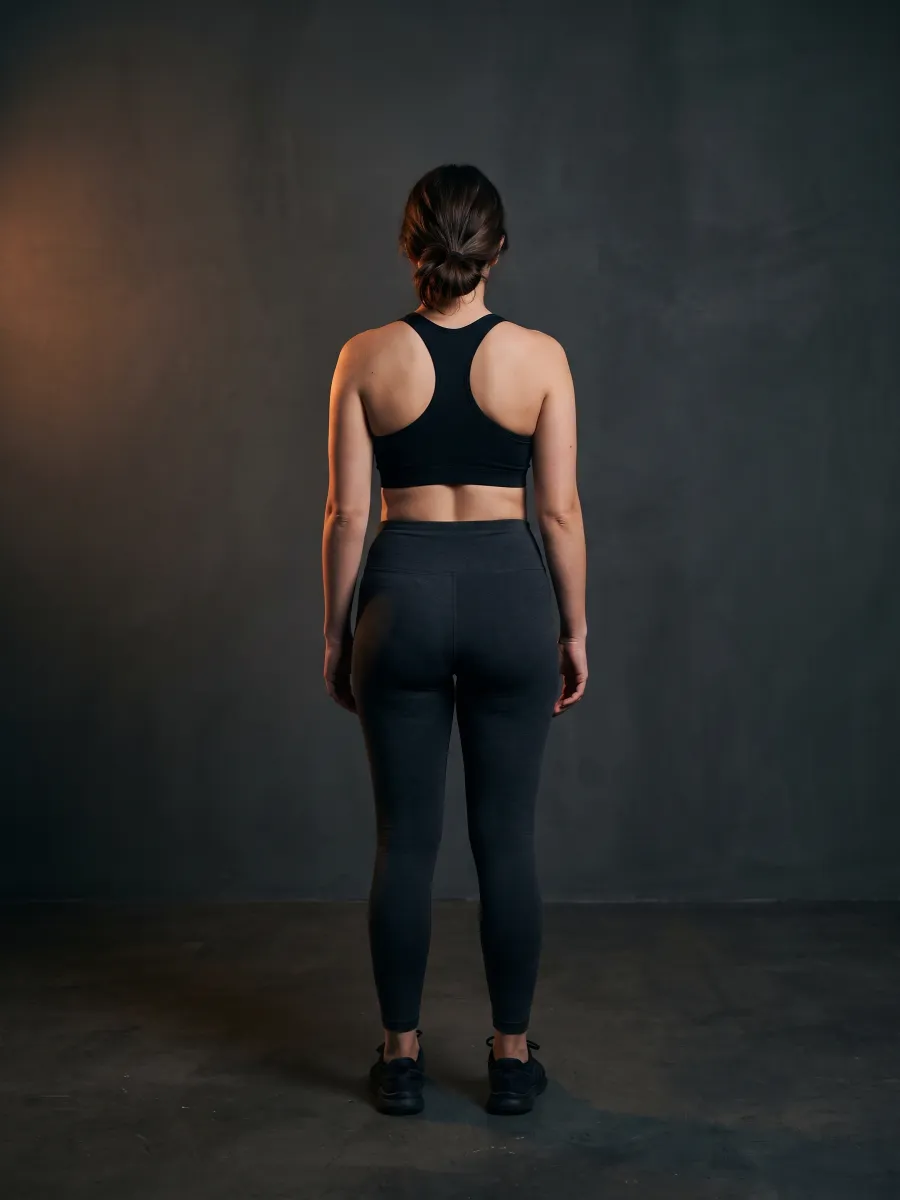
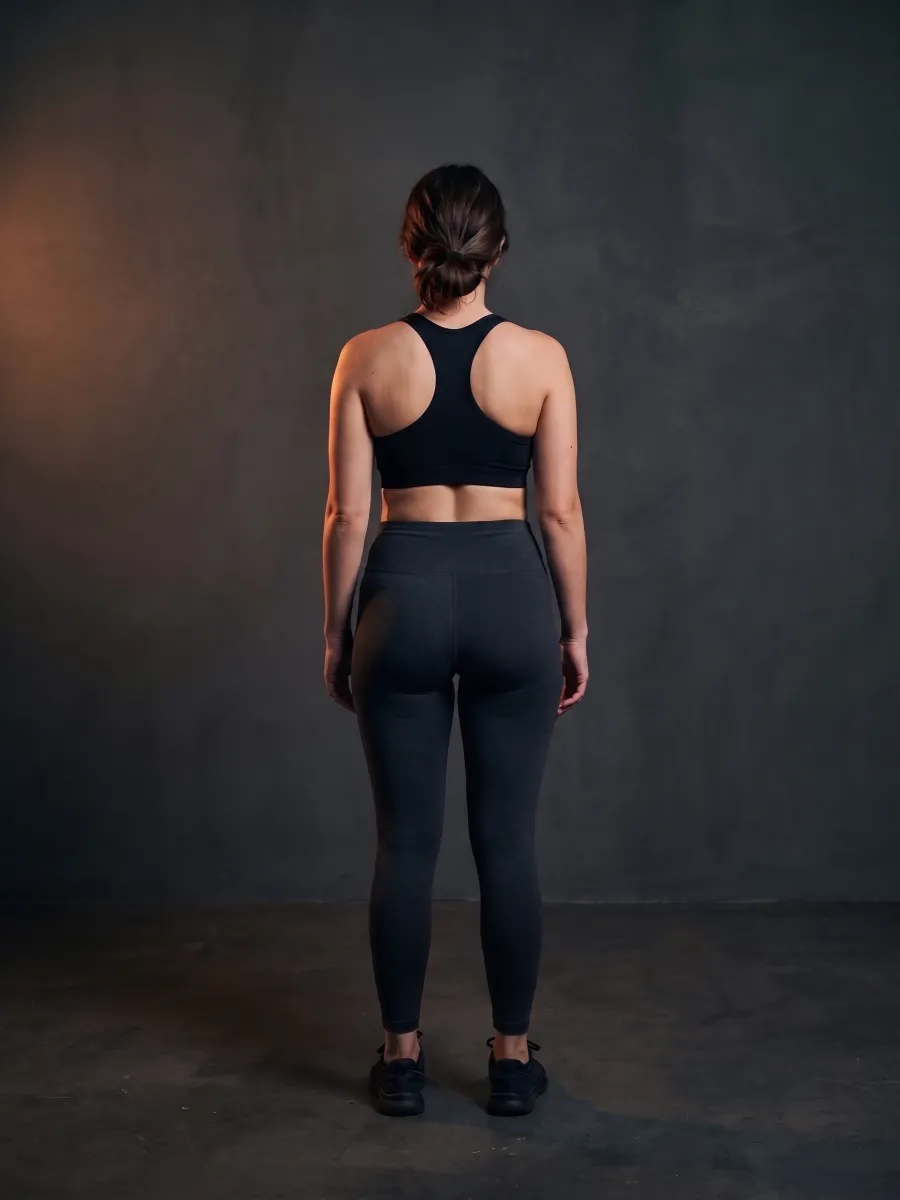 Untrained After 1 year
Drag across the photo to compare
An illustration of the numbers you enter — not a prediction, a medical assessment, or an ideal. For adults 20 and older.
How the Body Visualizer Works
The numbers are calculated from what you enter every time you move a slider. The photo is the closest match from a library of one woman photographed at five body sizes and four training levels, from the back and the side, all in the same pose and light — so when you drag across it, the only thing that changes is her body.
There are two ways to use it. Height and weight estimates your bust, waist and hips from typical proportions, which is quick but approximate. Measurements uses your actual tape numbers, which is slower but far more accurate, and lets you compare a goal with where you are now.
Same Weight, Different Shape
The years of training slider exists because of the most common frustration I hear: the scale has not moved, so nothing has changed. That is usually not true. Adding glute muscle while your weight stays roughly the same takes a little from the waist and puts it on the hips, and it rounds out the side profile. Slide it up and watch the side view — that projection is what training builds, and the number on the scale does not show it.
If your starting point is very little shape, the flat butt guide covers where to begin. If your width sits low and the top feels empty, the A-shaped butt guide is the one to read. Not sure which you are? The glute shape quiz sorts it in four questions.
How Much Muscle Can Women Gain a Year?
The slider runs on Lyle McDonald’s natural muscle gain estimates. His numbers are written for men, and he says women should use roughly half of them, so this is the women’s version:
| Years of proper training | Women’s potential rate of muscle gain per year |
|---|---|
| Year 1 | 10–12 lb (4.5–5.4 kg) |
| Year 2 | 5–6 lb (2.3–2.7 kg) |
| Year 3 | 2–3 lb (0.9–1.4 kg) |
| Year 4+ | Minimal |
Added up, that is about 17–21 lb of muscle over a lifting career, with most of it in the first two years. Two things matter about how to read it. It is whole-body muscle, not glutes alone — the photos show the share that lands on your hips and side profile. And “proper” is doing real work in the table: years of training without progression do not count, so if you have been going through the motions, you likely still have first-year gains available.
What Your Waist-to-Hip Ratio Means
The ratio is your waist divided by your hips. It is the one number in this tool worth paying attention to, because both halves of it respond to what you do. Building glute muscle raises the bottom of the fraction; losing fat usually lowers the top.
For health, the World Health Organization uses 0.85 as the level above which risk begins to rise for women. For appearance, preference research clusters around 0.7 — I went through those studies in what the most attractive butt shape actually is. Neither is a standard your body owes anyone. They are useful as a direction, not a verdict.
Read the Result Correctly
BMI is weight divided by height squared, and it is the only calculation here that says anything about health — and even then only roughly. It cannot tell muscle from fat, so a strong woman with well-built glutes can read as overweight. The categories follow the CDC adult BMI categories and apply to adults 20 and older.
The photo is an illustration, not a forecast of how you will look. Bone structure, where your body stores fat, and where your muscles attach all change how the same measurements sit on a real person. Use it to see a direction, then use a tape and progress photos to track the real thing.
Body Visualizer FAQs
How accurate is the body visualizer?
It is exact to the numbers you enter and approximate to your body. The numbers — BMI, waist-to-hip ratio, healthy weight range and muscle gain — are exact to what you enter. The photo is the closest match from a library of body sizes and training levels, so it shows a body like yours, not your body. Two women with the same numbers can look quite different, so treat it as an illustration, not a prediction.
What is a good waist-to-hip ratio for women?
For health, the World Health Organization uses 0.85 as the point above which risk starts to rise for women. For appearance, preference research clusters around 0.7. Neither is a target you owe anyone — the ratio is useful mainly because both parts of it respond to training and body fat.
Can building glute muscle change my shape at the same weight?
Yes, within limits. Muscle is denser than fat and sits in a different place, so adding glute muscle while your weight stays similar makes the hips fuller and the side profile rounder. The years of training slider in this tool shows that effect, compared with the same weight untrained.
How much muscle can a woman gain in a year?
Using Lyle McDonald’s estimates, roughly 10–12 lb in the first year of proper training, 5–6 lb in the second, 2–3 lb in the third, and very little after that — about 17–21 lb over a lifting career. That is whole-body muscle, it assumes good training and enough food, and it slows with age.
How do I measure my bust, waist and hips?
Use a soft tape, snug but not pulling, kept level with the floor. Bust goes around the fullest part of your chest. Waist goes around the narrowest point, usually just above the belly button. Hips go around the fullest part of your glutes — look in a mirror side-on to find it.
Is my data saved or sent anywhere?
No. Everything is calculated in your browser. Nothing you enter is stored or sent to us, and there is no sign-up.
Why is the visualizer only for women?
Build The Shelf is a glute training site for women, and the photos and proportions it uses are women’s. A man’s body changes differently with the same numbers.
Want the plan that changes the shape?
The Build The Shelf app builds a glute routine around your week and tracks your sets, so the shape actually moves.