Square Butt (Square Glutes): What Causes It and How to Round It Out
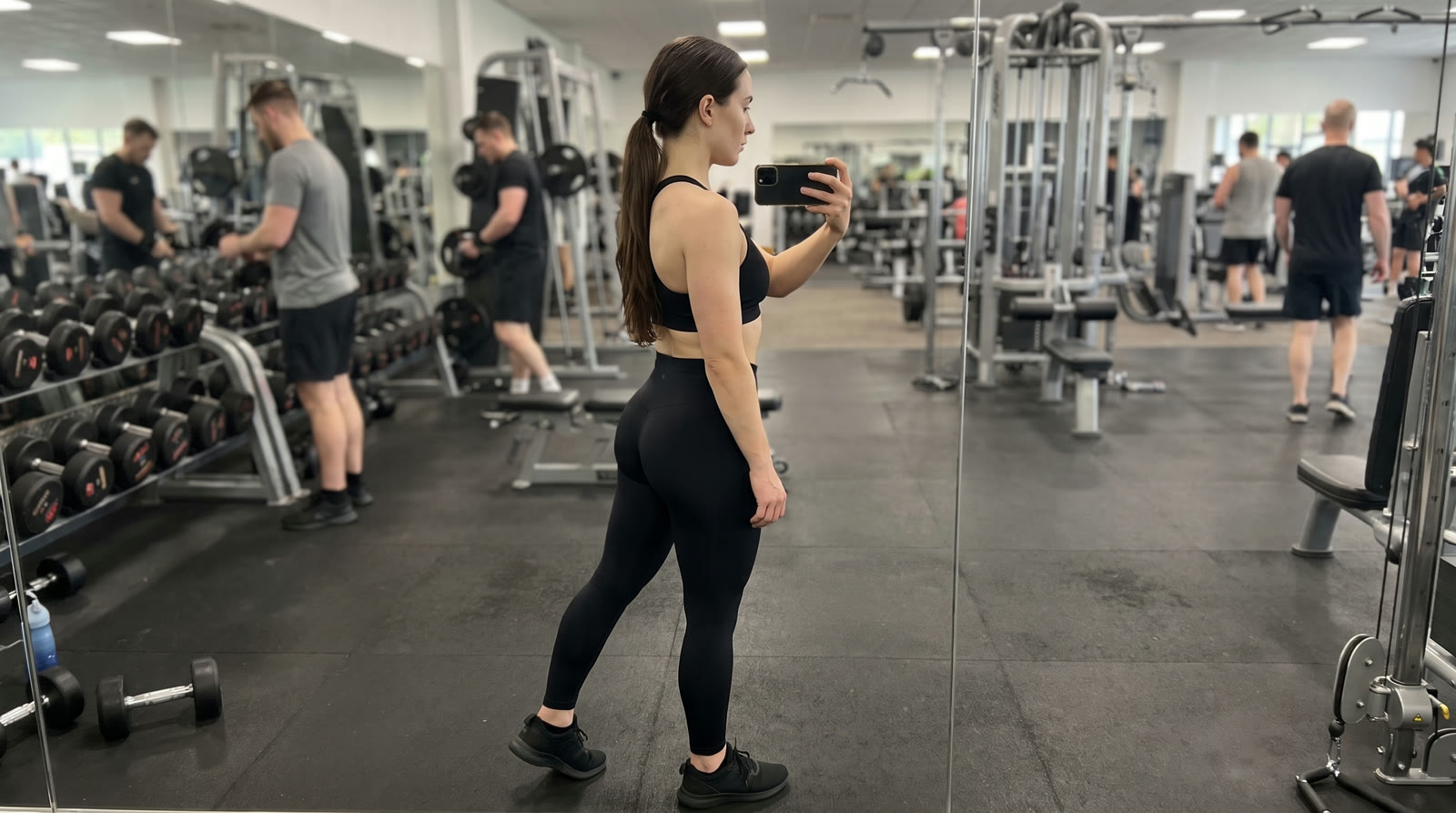
A square butt — also called boxy or H-shaped — is when your glutes run fairly straight down the sides instead of curving out from the waist into the hip. Nothing is wrong with you. It’s usually an underbuilt gluteus medius and upper glute max sitting on your natural pelvis width.
You can’t change your bones, but you can add muscle where the curve should be, and that’s what changes the outline. Train the glute medius for side and upper width and the glute max for projection — the four lifts that do the most are heavy hip thrusts, seated or cable hip abductions, step-ups and RDLs — and give it three to four months. The week to run is below.
What a Square Butt Actually Is (And How to Tell If You Have One)
Square, boxy, H-shaped, “box butt” — they all describe the same thing: an outline that runs straight from the waist to the outer thigh, with little curve at the side and often not much projection from the side either. It’s an appearance word, not a medical category. There’s nothing to diagnose here, just a shape to read.
The quickest way to know if it’s yours is to compare it with the shapes it gets confused with:
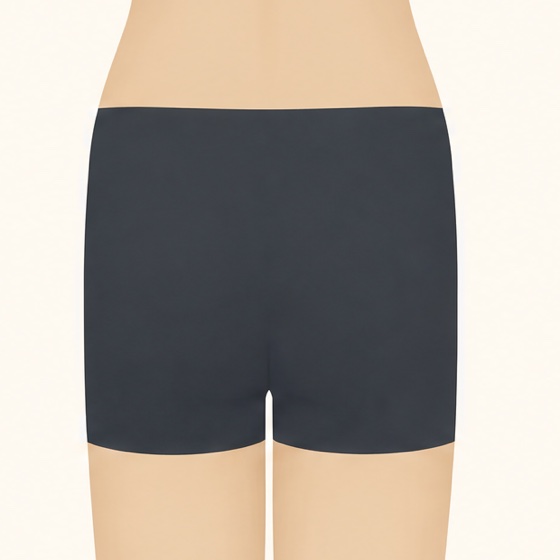
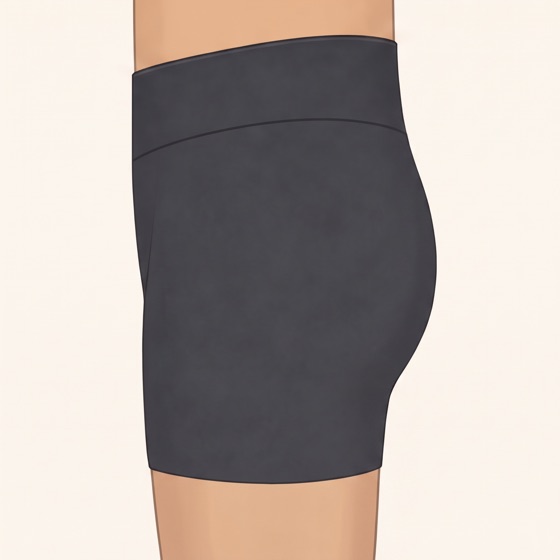
Square
Also called H-shape or straight
A straight line from waist to hip, often with a dip at the upper-outer hip.
Usually missing Glute medius — it sits above the upper-outer hip and softens the dip.
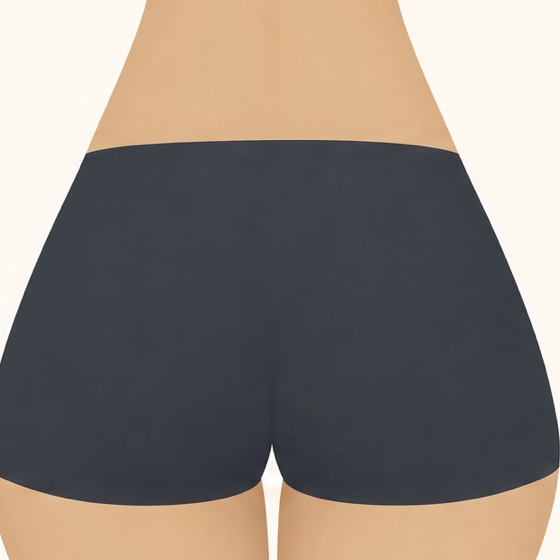
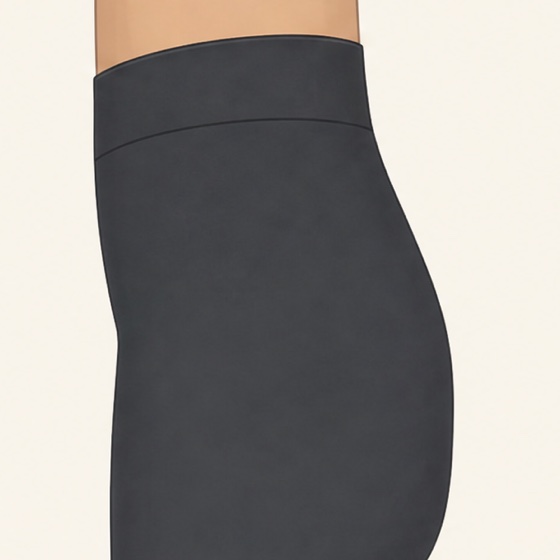
A-shape
Also called pear — some charts group it with heart
Narrow at the top, widest at the lower glute and upper thigh.
Usually missing Upper glute and glute medius.
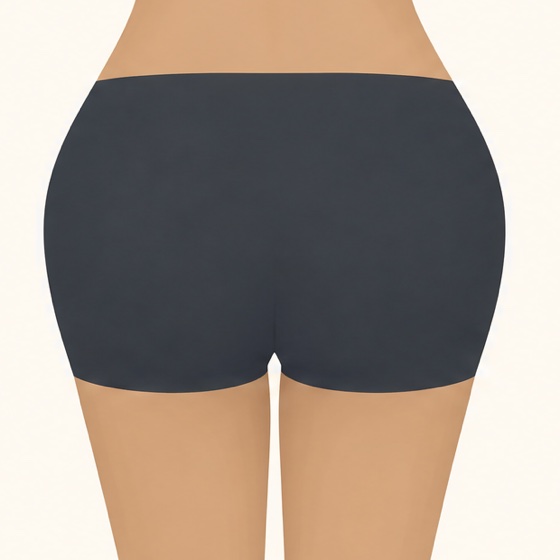
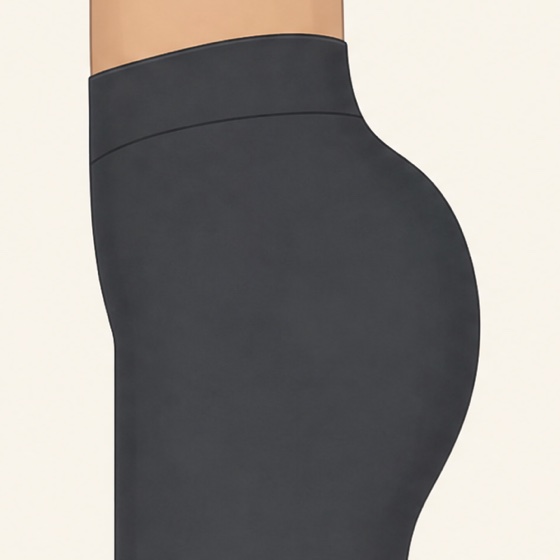
V-shape
Also called inverted V
Widest up near the hip bones, tapering narrower toward the lower glute.
Usually missing Lower glute max — fullness down low.
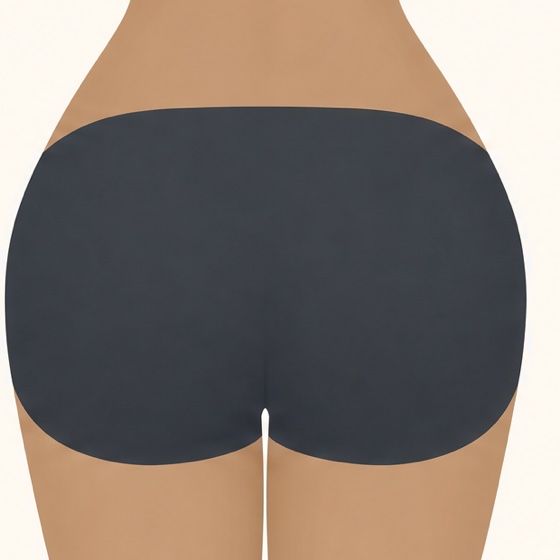
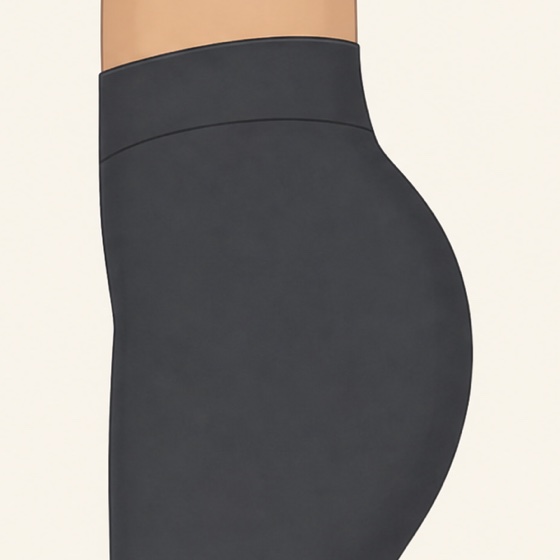
Round
Also called apple, bubble or peach
Even fullness from top to bottom, with clear projection from the side.
Usually missing Nothing major — train for size.
Then run three checks in fitted shorts, standing relaxed in front of a mirror:
- Back view: does the line from your waist to your outer thigh run straight down, without flaring out at the hip?
- Side view: do your glutes project noticeably behind the line of your lower back, or does the back of your hips look fairly flat?
- The waist line: run a finger down from the side of your waist. Do you feel your waist curve in and then out into the hip, or a fairly straight wall?
If two or three of those come back square — straight sides, a flatter side view, a straight wall — you’re in the right place. If not:
- Widest down low, near the top of your thighs? That’s an A-shape.
- Widest up high, flatter down low? That’s an inverted V.
- Not much fullness anywhere? Start with the flat butt guide.
Still not sure? The glute shape quiz sorts it in four questions, and the butt shapes guide compares all six shapes side by side.
Why Your Glutes Look Square
Four things build the outline:
- Pelvis width and hip bone shape — your frame.
- Where your body stores fat — largely genetic and hormonal.
- Where your muscles attach — also fixed.
- How much glute medius and upper glute max you’ve built — the only one of the four you control, and usually the biggest visual lever for a square shape. My upper glute exercises guide covers how to build both.
Your glutes are three muscles. The gluteus maximus is the big one closest to the surface; it extends the hip and gives you projection. The gluteus medius sits higher and to the side, with the smaller gluteus minimus underneath it, and they move the thigh out to the side and rotate it (Cleveland Clinic). The medius also works hard to keep your pelvis level when you stand on one leg (Macadam, Cronin and Contreras, 2015), which is why single-leg work trains it so well.
That splits a square shape into two problems, and many people have both:
- Square from behind is a width problem. An underbuilt glute medius and upper glute max leave nothing to fill the space between the top of your hip bone and the widest part of your glutes, so the side runs straight.
- Square from the side is a projection problem. An underbuilt glute max means the back of your hips sits close to the line of your lower back. Standing with your hips tucked under can flatten the side view further.
A couple of things can make it look more square than it is. A low hip dip — the indent just below your hip bone — is mostly bone: it’s the gap between the top of your pelvis and the bony point at the top of your thigh bone. Training the glute medius above it can soften it, but no exercise erases it (The Conversation). And a waistband or underwear line cutting across your glutes can fake a boxy look in photos, so check in a mirror, not a tagged picture.
Training history matters too. Years of squats and leg presses with no abduction work leave the side of the hip undertrained on almost anyone.
Can You Fix a Square Butt, Or Just Make It Look Better?
You can change the outline. You can’t change the frame.
Training changes: the curve at the side, upper-glute fullness, projection, roundness, firmness, and left-to-right balance.
Training doesn’t change: pelvis width, bone shape, where your muscles attach, or where your body stores fat (Healthline).
So the realistic win is a visible curve from hip to glute and more projection in your side view — not a different skeleton. For most people that’s the whole difference they were looking for.
Some of the pages ranking for this sell surgery: fat transfer to the hips and liposuction of the flanks. Those are real procedures that change the frame, and they come with the costs and risks of surgery. You don’t need them to change the outline. Give four months of genuinely progressive training a fair shot first, and you’ll know how much of your shape was muscle.
One condition: you have to eat enough to build muscle. Chasing a rounder shape while cutting hard is the most common reason nothing changes.
Best Exercises for Square Glutes
These nine cover both halves of the problem — the side curve and the projection:
| Exercise | Sets × reps | What it builds | Fixes | Home swap |
|---|---|---|---|---|
| Barbell hip thrust | 3–4 × 6–10, heavy | Glute max | Flat side view | Dumbbell hip thrust off the couch |
| Seated hip abduction | 3 × 15–20, lean forward slightly, 1-second hold | Glute medius | Straight sides from behind | Banded seated abduction |
| Cable hip abduction | 3 × 12–15 per side | Glute medius | Upper-outer shape | Standing banded abduction |
| Step-up to a knee-height box | 3 × 8–10 per leg | Glute max, one leg at a time | Even fullness on both sides | Step-up onto a sturdy chair or stair |
| Bulgarian split squat | 3 × 8–10 per leg | Glute max in the stretch | Overall fullness | Rear foot on the couch, dumbbells in hand |
| Romanian deadlift | 3 × 8–12 | Glute max and hamstring tie-in | Lower-glute shelf | Dumbbell RDL |
| Cable kickback | 3 × 12–15 per side | Glute max | Projection at lockout | Banded kickback |
| Glute-biased 45-degree back extension | 3 × 12–15 | Glute max | Overall fullness | Banded good morning |
| Frog pump | 2 × 20–30, as a finisher | Glute max | General fullness | Same, bodyweight |
A few notes on how to use them:
- Load the glute medius like any other muscle. It needs progression, not 400 easy reps. Band walks and clamshells are fine as a warm-up but hard to make heavier — seated and cable abductions are where it actually grows. My glute accessory exercises guide covers how to fit them in without letting them take over.
- Pair short and long muscle lengths. Hip thrusts, kickbacks and frog pumps load the glutes when they’re shortened; RDLs, Bulgarian split squats and deep step-ups load them stretched. Training at longer muscle lengths looks especially useful for growth (Optimizing Resistance Training Technique to Maximize Muscle Hypertrophy, 2024), and doing both covers the whole range — more in shortened vs lengthened glute exercises.
- Cover the four movement patterns every week: a thrust, a squat or lunge, a hinge, and abduction.
- Yes, back extensions help square glutes — they build the glute max — if you round your upper back slightly, tuck your chin, turn your toes out and drive the movement with your hips rather than arching your lower back. For the upper-outer corner itself, abduction does more: the upper glute max is more active than the lower in moves that take the leg out to the side or rotate it outward (Selkowitz, Beneck and Powers, 2016).
The Square-to-Round Glute Workout (3 Days a Week)
| Day | Focus | Exercises | Progression cue |
|---|---|---|---|
| Day 1 | Projection | Barbell hip thrust 4×6–10 · RDL 3×8–12 · Seated abduction 3×15–20 · Frog pump 2×25 | Add 5 lb to the thrust once you hit 10 reps on every set |
| Day 2 | Side and upper | Step-up 3×8–10/leg · Cable hip abduction 3×12–15/side · Glute-biased back extension 3×12–15 · Banded lateral walk 2×20 steps (warm-up only) | Add a rep per set each week before adding load |
| Day 3 | Balance and stretch | Bulgarian split squat 3×8–10/leg · Dumbbell hip thrust 3×10–12 · Cable kickback 3×12–15/side · Seated abduction 2×20 | Match your weaker side’s reps, then progress both |
How to run it:
- Leave about 48 hours between glute days.
- Only have two days? Run Day 1 and Day 2.
- No gym? Use the home swap column from the exercise table — banded seated abduction, an elevated single-leg glute bridge, dumbbell RDLs and couch-elevated split squats cover it.
- Train the glute medius every session. It’s the part that builds the curve, and it’s the part everyone skips.
New to lifting? The beginner glute program is a gentler way in.
Want this built around your actual week? Join the waitlist — the Glute Routine Builder turns it into your plan, around your days, time and equipment.
How Long Until a Square Butt Looks Rounder?
- Weeks 1–4: strength climbs, and your shape mostly doesn’t change. That’s expected — early strength gains come mostly from your nervous system learning the lifts, before muscle growth takes over (Moritani and deVries, 1979). Measure it by your hip thrust weight.
- Weeks 6–12: the first visible change, usually more projection in your side view and a slight flare at the upper-outer glute.
- Months 4–6: the curve from hip to glute is where a photo comparison shows a clear difference.
- Month 6 and beyond: the new outline holds and keeps improving as long as you keep progressing.
The full week-by-week picture is in how long it takes to grow glutes.
These are typical ranges, not promises, and they only count if you ate enough and kept adding load.
You won’t notice it in the mirror, because you see yourself every day. Take back and side photos in the same shorts, same light and same spot every four weeks, and compare those instead.
Sticking with it matters more than picking perfect exercises: three sessions a week for 16 weeks beats a perfect plan you run twice. The Build The Shelf app keeps your progress photos private and side by side for exactly this reason — join the waitlist to get it first.
What Won’t Fix Square Glutes
- Band walks and clamshells as the whole plan. Fine as a warm-up, far too hard to progress to build the glute medius.
- Endless high-rep bodyweight circuits with no added load.
- Waist trainers and “shrink your hips” advice. You build the curve; you don’t shrink the frame.
- Ab work to burn fat off your flanks. You can’t choose where you lose fat.
- A new “square butt fix” from TikTok every week. Progressive overload needs the same lifts long enough to add weight to them.
- Squats as your only glute exercise. Squats build the glute max about as well as hip thrusts do (Plotkin et al., 2023), but they don’t train abduction — and abduction is the part a square shape needs most.