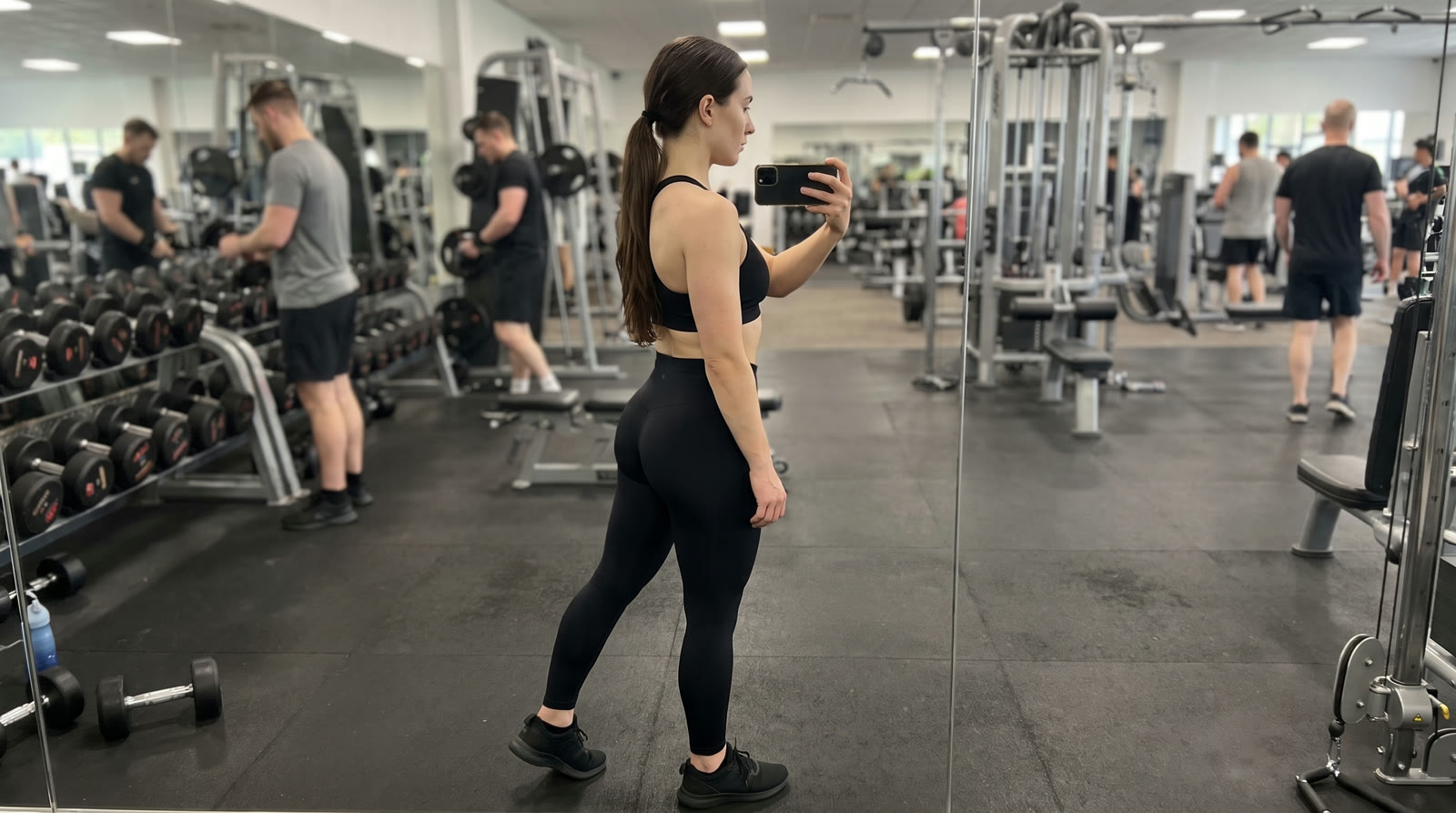
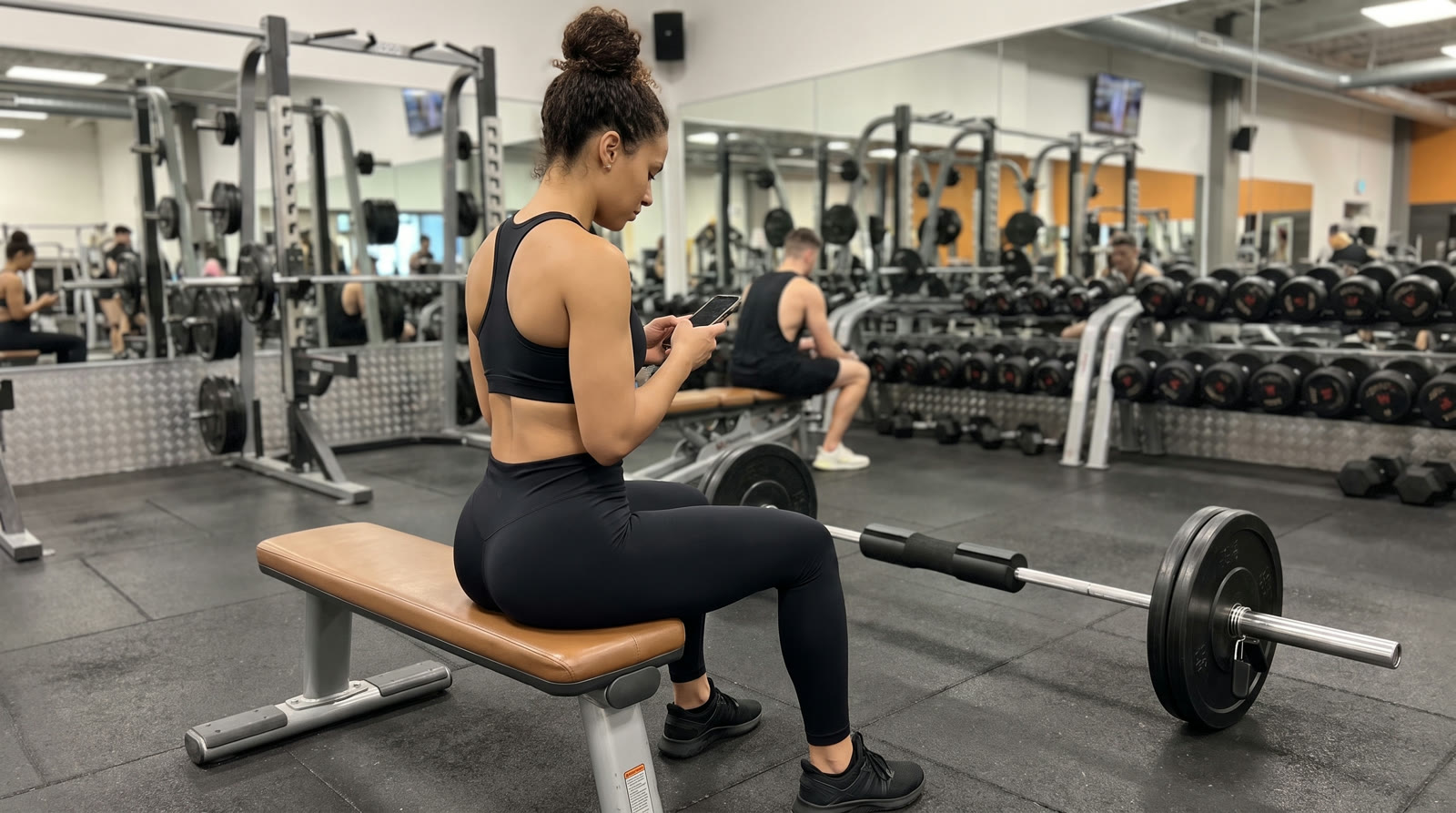
Heart-Shaped Butt: What It Is, What Causes It, and How to Grow It
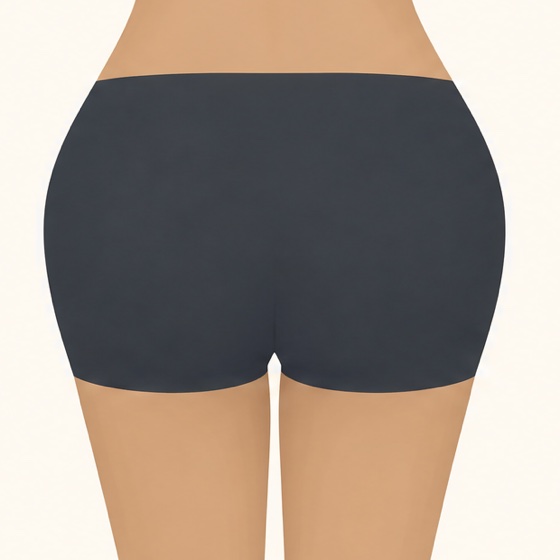
A heart-shaped butt is widest in the lower half of the glutes, curves back in where the glutes meet the thighs, and pinches in at the waist — from behind, it reads like an upside-down heart, with the fullness sitting low and a clear waist-to-hip contrast up top. It comes from the shape of your pelvis, fat stored on the lower hips and glutes, and the muscle you’ve built on top. It isn’t a defect, and it isn’t something you did.
If you want it fuller rather than different, build the glute max for projection and the glute medius for the upper-outer corner: hip thrusts, RDLs, step-ups and an abduction, two to three days a week. Below: pictures to compare yourself against, a 30-second self-check, what causes the shape, and the exact exercises with sets and reps.
What a Heart-Shaped Butt Actually Is
The outline is what makes it a heart: the widest point sits low, in the lower half of the glutes, the shape curves back in where the glutes meet the thighs — like the rounded bottoms of a heart’s two lobes — and the waist curves in clearly above the hips. People also call it a heart butt, an upside-down heart bum, or just a curvy butt. It sometimes gets lumped in with the pear or A-shape, but it isn’t the same thing — more on that below.
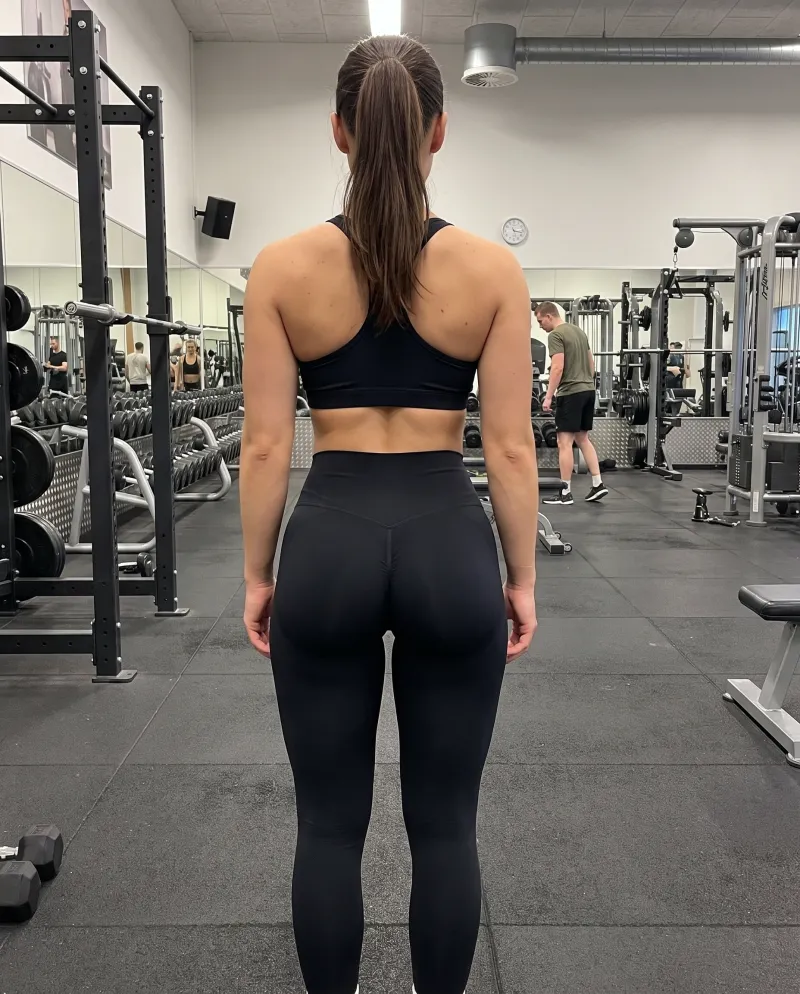
These are appearance words that grew up online, not medical categories. And the shape is an outline, not a size: you can have a heart shape at any body size.
Three things build it: the shape of your pelvis and where your hip bones sit, where your body stores fat, and how much glute max and glute medius muscle sits on top. Only the last one is fully in your hands.
Do You Actually Have One? (30-Second Self-Check)
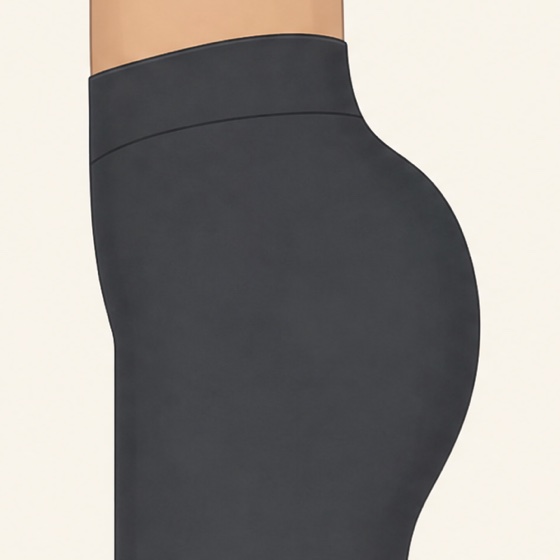
Take two photos: one straight-on from behind and one from the side. Put the phone at hip height about three feet away, stand with your feet hip-width apart, don’t flex, and wear fitted leggings or shorts. Then compare yourself with the four shapes a heart gets confused with:
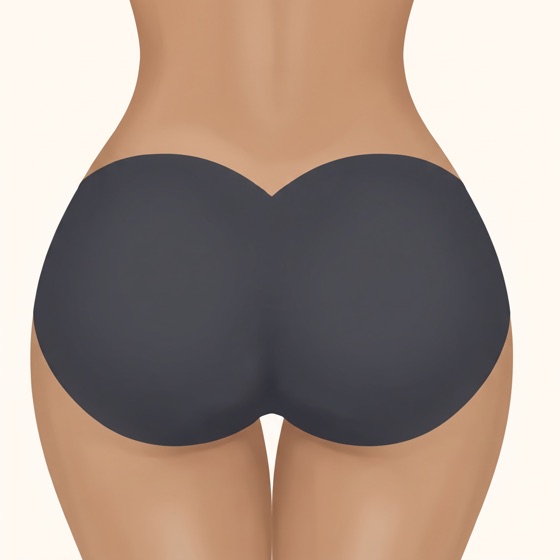
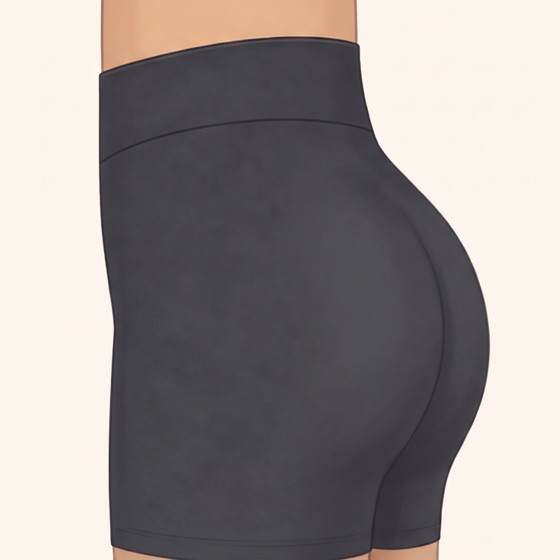
Heart
Also called upside-down heart
A clear waist pinch, widest in the lower half of the glutes, then curving back in toward the thighs.
Usually missing Usually balanced — build the upper glute for the shelf.
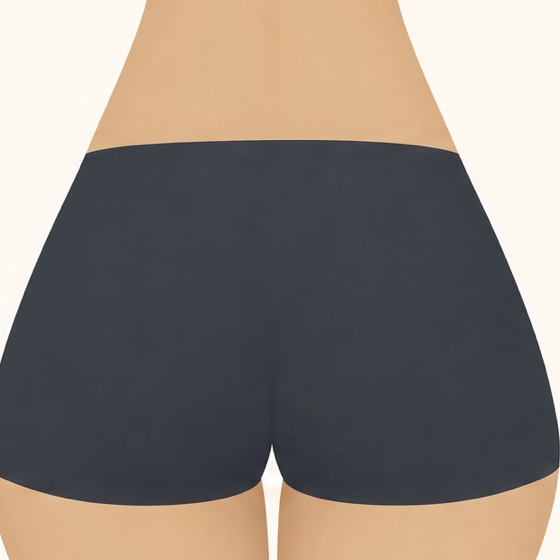
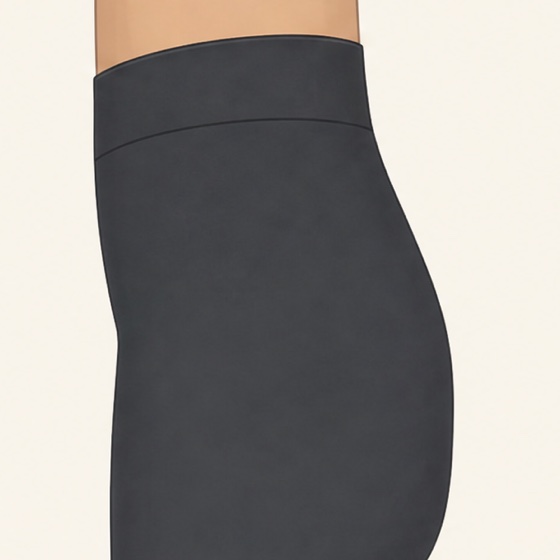
A-shape
Also called pear — some charts group it with heart
Narrow at the top, widest at the lower glute and upper thigh.
Usually missing Upper glute and glute medius.
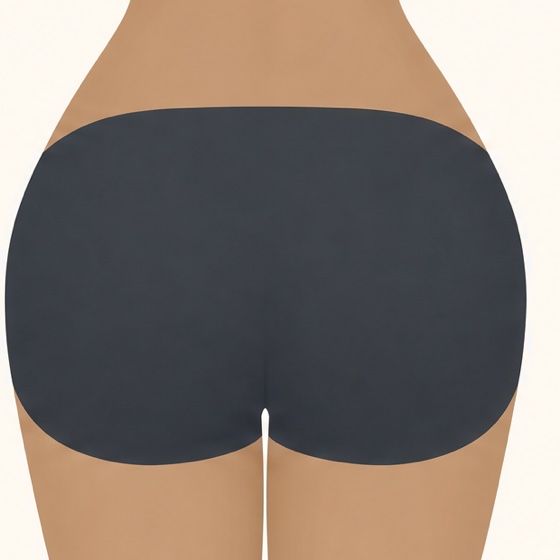
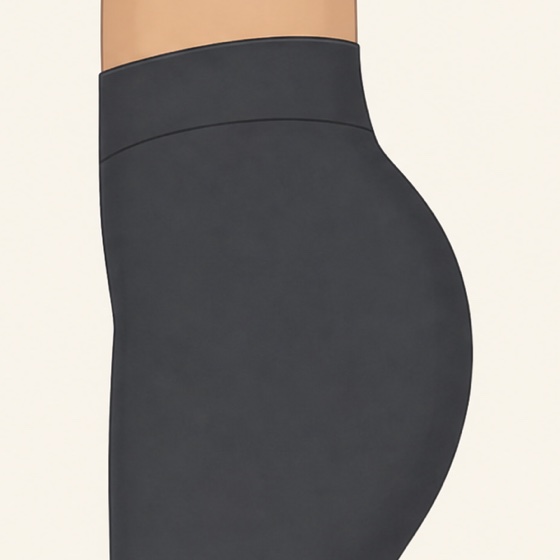
Round
Also called apple, bubble or peach
Even fullness from top to bottom, with clear projection from the side.
Usually missing Nothing major — train for size.
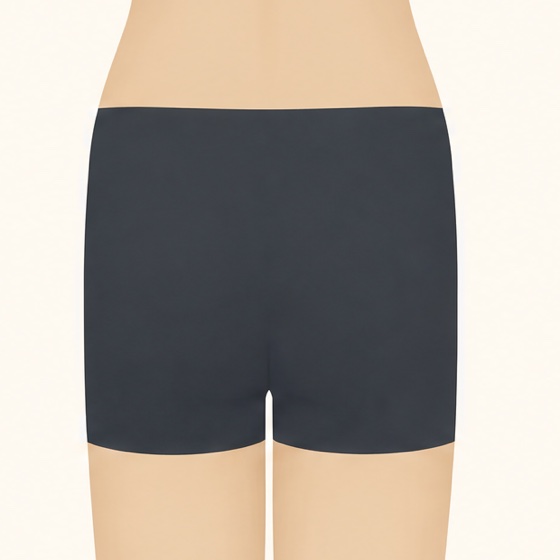
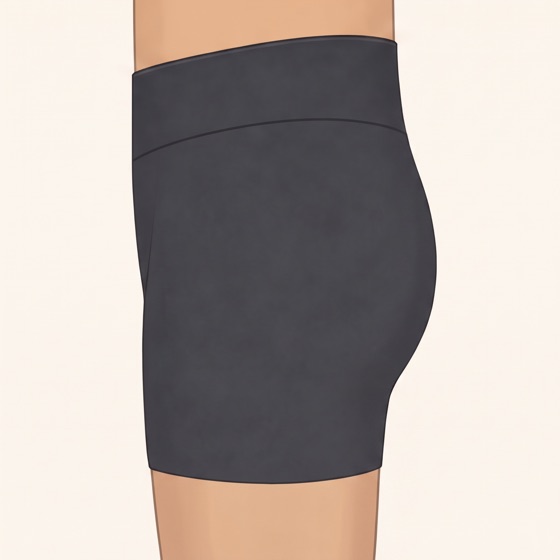
Square
Also called H-shape or straight
A straight line from waist to hip, often with a dip at the upper-outer hip.
Usually missing Glute medius — it sits above the upper-outer hip and softens the dip.
V-shape
Also called inverted V
Widest up near the hip bones, tapering narrower toward the lower glute.
Usually missing Lower glute max — fullness down low.
Now answer four questions:
- Is your widest point in the lower half of your glutes, rather than up near your hip bones or right down at the top of your thighs?
- Does your outline narrow again where your glutes meet your thighs?
- Is there a clear inward curve at your waist above your hips?
- From the side, does your fullness sit low rather than high?
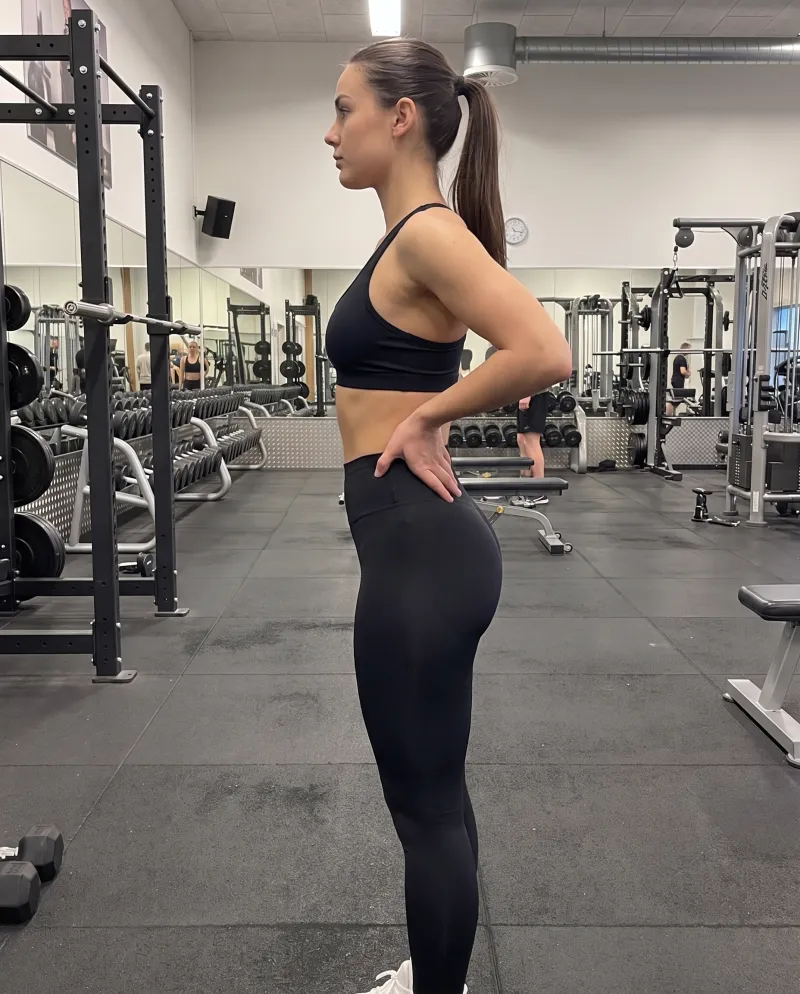
Three or four yeses means a heart shape. If not:
- Widest at the very bottom, with no taper back in? That’s an A-shape.
- Full up top and narrow at the bottom? That’s an inverted V.
- Straight sides with little curve? That’s a square or H-shape.
- Even fullness all the way round? That’s a round or peach butt.
Most people are a blend, and the label only changes where you put the emphasis in training. Still unsure? The glute shape quiz sorts you into one of six shapes, including heart, in four questions. The female body visualizer shows a body at your height and weight before and after glute training.
Heart vs A-Shape vs Round vs Square vs V — The Differences in One Look
| Shape | Widest point | Waist-to-hip curve | What usually creates it | What to train first | Full guide |
|---|---|---|---|---|---|
| Heart | Lower half of the glutes | Strong | Pelvis shape, fat stored low on the hips and glutes, lower glute fullness | Glute medius and side projection | You’re here |
| A-shape (pear) | At the line where glutes meet thighs | Moderate | Fat stored low, upper glute underbuilt | Heavy hip thrusts and abduction | A-shaped butt |
| Round (peach) | Middle of the glutes | Moderate | Even fat distribution, well-developed glute max | Keep overloading what you have | Peach butt |
| Square (H) | Even from top to bottom | Little | A straight waist-to-hip line, underbuilt glute medius | Seated abduction and cable kickbacks | Square butt |
| Inverted V | Up near the hip bones | Varies | Fat carried at the waist and upper hips, underbuilt lower glute max | Hip thrusts and RDLs | Inverted V |
The “four types of buttocks” you see in magazine-style graphics are usually round, square, V, and heart — with heart and A-shape treated as the same shape (Healthline). They’re worth separating, because they train differently:
- Heart vs A-shape: both are wide at the bottom, but a heart tapers back in below its widest point and has a clear waist pinch. An A-shape keeps widening all the way to the thighs. They’re the easiest pair to confuse.
- Heart vs round: a round butt is evenly full all the way round, with its widest point in the middle. A heart carries its fullness lower, with a narrower top and a sharper curve at the waist.
- Heart vs square: a square shape has little curve from waist to hip and often a flat upper-outer corner, where the glute medius is underbuilt.
- Heart vs inverted V: an inverted V is the reverse — full up top, narrow at the bottom. It’s easy to swap them, because “upside-down heart” and “inverted V” both sound like flipped shapes.
What changes in training: a heart already has the low fullness, so you add upper-outer roundness and projection. An A-shape adds up top without trying to shrink the bottom. A V builds the lower glute max. The butt shapes guide covers all six shapes side by side.
What Causes a Heart-Shaped Butt
- Your pelvis. The width and shape of your pelvis help set where your widest point sits. That’s bone structure, and training doesn’t change it (Healthline).
- Where you store fat. Estrogen tends to favour fat storage on the butt and hips, and when it drops after menopause, fat shifts toward the midsection (Healthline). Fat stored low is a big part of the low fullness and the waist curve.
- Where your glute max attaches. The point where the glute max inserts varies a lot from person to person (StatPearls), and coaches commonly see lower attachments read as fuller, lower glutes.
- Your waist. The heart look is as much about the waist as the butt — a smaller waist relative to the hips makes the outline obvious, and a fuller waist hides it.
Your glutes themselves are three muscles: the glute max, the big one closest to the surface, extends the hip and gives you projection; the glute medius sits higher and to the side, with the smaller glute minimus underneath, and moves the thigh out to the side (Cleveland Clinic). The medius helps round out the upper-outer corner of a heart.
A heart shape doesn’t mean you’re overweight, underweight, or anything else. The honest limit: you can add muscle and change your body fat, but you can’t move your hip bones or choose where fat leaves first.
Is a Heart-Shaped Butt the “Best” Shape?
Part of why it gets called the most attractive shape online is its waist-to-hip contrast, which research suggests matters more to how a body is rated than weight does. In the best-known study on this, Devendra Singh’s 1993 research, figures with a waist-to-hip ratio of around 0.7 were rated most attractive. I went through that research in what the most attractive butt shape actually is.
But no shape is a scorecard. What makes any shape look better six months from now is muscle underneath it, not a different label.
And a blunt note on the “perfect heart” pictures: a lot of what circulates is surgery, posing, a flattering camera angle, or a waistband doing a lot of work. You’re not failing to match an unedited body. What’s actually in your control is fullness, projection from the side, upper-outer roundness, and firmness.
Can You Grow a Heart-Shaped Butt — or Lose the Shape by Lifting?
Yes, you can grow it. And no, lifting won’t erase the heart outline — muscle adds to your frame; it doesn’t redraw your pelvis.
What growing it changes: more projection from the side, a fuller upper-outer corner, and a firmer lower glute. The waist curve stays unless your waist gets significantly bigger.
What can flatten a heart shape is losing fat with nothing built underneath: the low fullness shrinks, and there’s little muscle to hold the shape. You also can’t spot-reduce your hips or choose where the heart widens.
Three things are non-negotiable: progressive overload (adding weight or reps over time), two to three glute sessions a week — training a muscle at least twice a week grows it better than once (Schoenfeld, Ogborn and Krieger, 2016) — more on that in how often to train glutes — and eating enough to build muscle.
The Best Exercises for a Heart-Shaped Butt (With Sets and Reps)
Cover four movement patterns every week — a thrust, a squat or lunge, a hinge, and an abduction. One of each is enough.
| Pattern | Exercise | Sets × reps | What it does for a heart shape |
|---|---|---|---|
| Thrust | Barbell or dumbbell hip thrust | 3 × 8–12 | The main builder of side projection |
| Hinge | Romanian deadlift | 3 × 8–10 | Builds the lower glute and hamstring tie-in that keeps the low fullness |
| Squat or lunge | Step-up or Bulgarian split squat | 3 × 8–10 per leg | The whole glute max one leg at a time, and left-to-right balance |
| Abduction | Seated abduction machine or banded seated abduction | 2–3 × 15–20 | The upper-outer corner that finishes the heart |
Optional finishers: cable kickbacks, frog pumps, and glute-biased back extensions — my glute accessory exercises guide covers how to use them, and my upper glute exercises guide covers the shelf itself. If you only want two, do a heavy hip thrust and a seated abduction.
Where the emphasis goes for this shape: you already have the low fullness, so put more of your effort into upper-outer glute medius work and side-view projection than into extra lower-glute volume.
A Simple 2–3 Day Heart-Shape Glute Week
| Day | Exercise | Sets × reps | Rest | Home or band swap |
|---|---|---|---|---|
| Day A | Hip thrust | 4 × 8 | 2 min | Banded single-leg glute bridge 3 × 15 |
| Day A | Romanian deadlift | 3 × 10 | 90 s | Banded good morning 3 × 15 |
| Day A | Seated abduction | 3 × 20 | 45 s | Seated band abduction 3 × 25 |
| Day B | Bulgarian split squat | 3 × 8 per leg | 90 s | Bodyweight split squat off the couch |
| Day B | Dumbbell hip thrust | 3 × 12 | 90 s | Banded glute bridge 3 × 20 |
| Day B | Cable kickback | 3 × 12 per leg | 60 s | Banded standing kickback 3 × 20 |
| Day B | Lateral band walk | 3 × 20 steps | 45 s | Same |
| Day C (optional) | Glute bridge · step-up · frog pump | 3 × 15 · 3 × 10 per leg · 2 × 25 | 60 s | Same |
- Leave about 48 hours between glute days.
- Progression: add 5 lb or one rep per set to the hip thrust and RDL whenever you hit the top of the rep range with good form — before adding any new exercises.
- Bands only at home? The swap column covers it: banded single-leg bridges in place of the barbell thrust and banded good mornings in place of the RDL.
Never touched a barbell? The beginner glute program is a gentler way in.
Want this sized to your actual week? Join the waitlist — the Glute Routine Builder fits this plan to your days, time and equipment.
How Long Until You See a Difference
- Weeks 1–4: your strength climbs, but your shape mostly looks the same. That’s normal — early strength gains come mostly from your nervous system learning the lifts, before muscle growth takes over (Moritani and deVries, 1979). What has to hold: the weights in your log going up.
- Weeks 8–12: noticeable firmness and a little more side projection, if you’ve kept adding weight. What has to hold: two to three sessions a week.
- Months 6–12: visible fullness and upper-outer roundness that other people notice. What has to hold: enough protein and enough total food.
These are typical ranges, not promises. The mirror can’t show you slow change day to day, so take photos every week or two from the same spot, in the same light and the same clothes — straight-on from behind and from the side — and compare those instead. If you want a structured first month to start with, the 30-day glute challenge is a good on-ramp, and here’s how long it takes to grow glutes, week by week.
The Build The Shelf app keeps those monthly photos private and side by side, and the Glute Routine Builder sizes this plan to your days, time and equipment — join the waitlist to get it first.