Upper Glute Exercises: How to Build a Glute Shelf
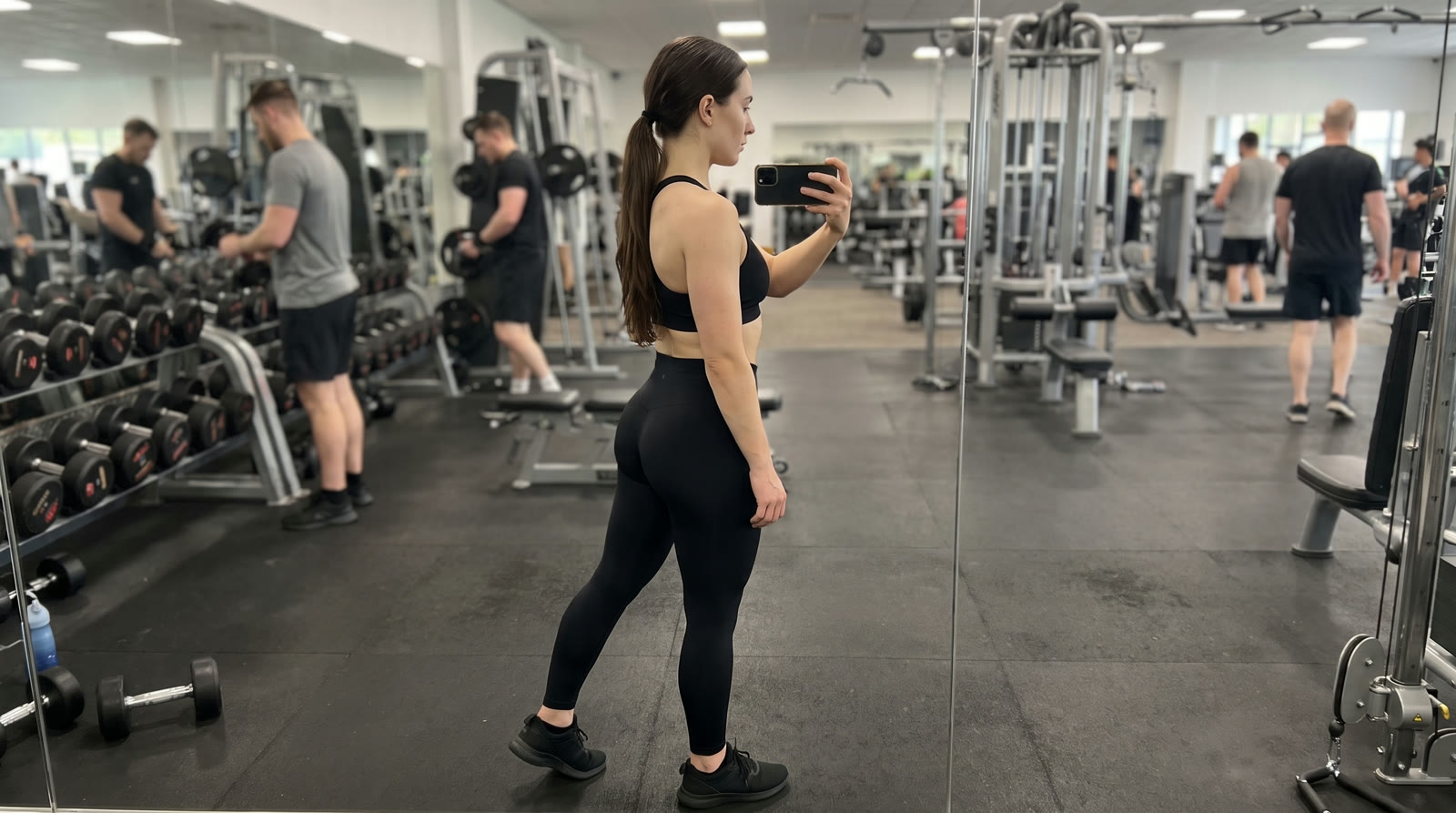
A glute shelf is the full, lifted top of your glutes — the upper part of the glute max and the glute medius beside it, built up enough that your butt projects straight out from your lower back instead of sloping into it. To build it, keep your heavy hip thrusts, squats or RDLs for overall size, and add moves that take your leg out to the side or rotate it outward, because those are the moves that favour the upper glute over the lower: seated or cable abduction, banded lateral walks, clamshells and angled kickbacks.
Two to three glute sessions a week, adding weight or reps over time, and the top usually starts to fill in within two to three months. Below: the 9 best upper glute exercises and why each one hits the top, a sample workout you can do today, and a week to keep going.
What Is a Glute Shelf?
“Glute shelf” — or shelf booty, top shelf, upper shelf — is slang for upper glutes full enough that the top of your butt looks like a ledge from the side. It’s an appearance word, not anatomy. It’s also the reason this site is called Build The Shelf.
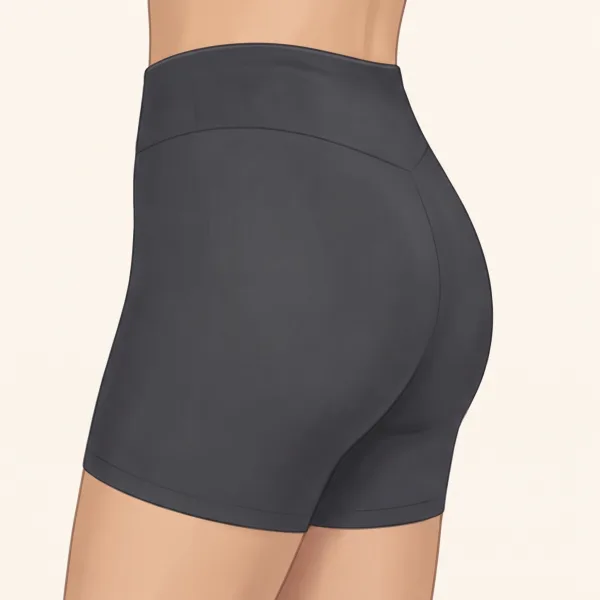
Flat at the top
The outline slopes down from your lower back and the fullness sits low.
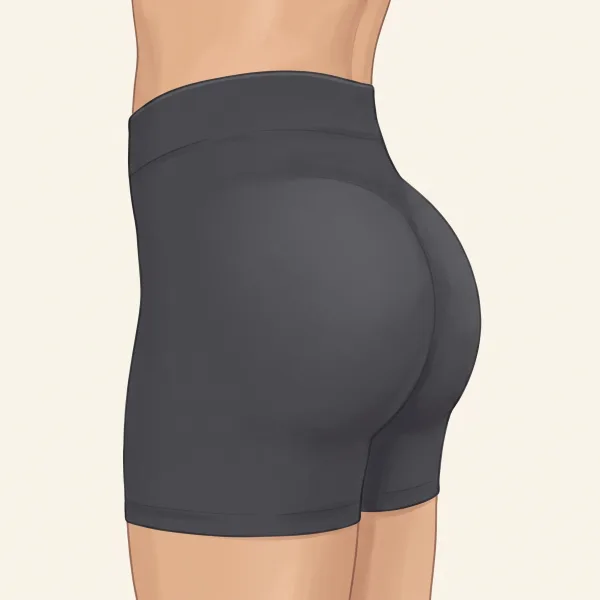
With a glute shelf
The upper glute max and glute medius are built up, so the top projects straight out from your lower back.
Two muscles make it:
- The upper part of the gluteus maximus. The glute max is the biggest muscle in your body and extends your hip (Cleveland Clinic). Its upper fibres sit right under where the shelf shows.
- The gluteus medius, which covers the side of your hip bone and moves your leg out to the side (Cleveland Clinic). It fills the upper-outer corner.
“Upper glutes” means the same region. Bodybuilders call the line where one muscle blends into the next a tie-in; the shelf is where your glutes meet your lower back. Your pelvis shape and where you store fat set part of that outline, but the muscle is the part you can build. If you have a heart-shaped butt, the shelf is usually the only thing missing.
Why Is Your Bum Flat at the Top?
Usually it’s training. If your program is all squats, lunges and deadlifts with no abduction work, the glute medius — the muscle that fills the upper-outer corner — gets very little direct work. In one nine-week trial in beginners, squats and hip thrusts both grew the glute max, but the glute medius and minimus barely grew at all (Plotkin et al., 2023).
Some of it is frame: your pelvis shape, how much your lower back curves, and where your body stores fat all affect how the top looks. If yours stores fat low on the hips and thighs, the top can look flat even when you train it — that’s the pear-shaped butt pattern.
A flat top shows up in a few butt shapes:
- A-shape: flat top, full bottom — see the A-shaped butt guide.
- Square: an empty upper-outer corner — see the square butt guide.
- Flat: little projection anywhere — see the flat butt guide.
Not sure which you are? The glute shape quiz names your shape in four questions.
What Actually Targets the Upper Glutes
The best evidence comes from a study that recorded the upper and lower glute max with fine-wire electrodes across 11 exercises. The upper glute max was more active than the lower glute max in exercises that took the leg out to the side or rotated it outward. Exercises that were mostly hip extension worked the upper and lower glute max about equally (Selkowitz, Beneck and Powers, 2016).
So the method has two parts:
- Heavy hip-extension lifts for overall size — hip thrusts, split squats, RDLs. They work the upper and lower glute max about equally, so they build the whole muscle, top included.
- Abduction and outward-rotation moves aimed at the top — machine or cable abduction, lateral walks, clamshells, angled kickbacks.
One caveat: these studies measure which muscle is working, not how much it grows. The growth still comes from progressive overload — more weight or more reps over time.
The 9 Best Upper Glute Exercises
| Exercise | Sets × reps | Why it builds the shelf | Home swap |
|---|---|---|---|
| Hip thrust Overall size | 3–4 × 8–12 | The biggest overall glute builder; a band above the knees adds an outward push | Banded hip thrust off the couch |
| Seated hip abduction Targets the top | 3 × 15–20, 1-second pause | Moves your legs out to the side — the glute medius and upper glute max’s job | Seated band abduction |
| Cable hip abduction Targets the top | 3 × 12–15 per side | Abduction standing, with tension all the way out | Standing band abduction |
| Banded lateral walk Targets the top | 3 × 15–20 steps each way | Abduction under constant tension; scored high for glute work in EMG testing | Same |
| Banded clamshell Targets the top | 3 × 15–20 per side | Outward rotation; the top-scoring glute move in the same testing | Same |
| Angled cable kickback Both | 3 × 12–15 per side | Hip extension with a little abduction — kick back and slightly out | Banded kickback |
| Bulgarian split squat or step-up Overall size | 3 × 8–10 per leg | Glute max one leg at a time, so both sides build evenly | Couch-elevated split squat or stair step-up |
| Single-leg RDL Overall size | 3 × 8–10 per leg | Glute max in a deep stretch while the glute medius holds your pelvis level | Same, with a dumbbell or loaded backpack |
| 45-degree back extension, feet out Both | 3 × 12–15 | Hip extension, plus outward rotation from turning your feet out | Reverse hyperextension off a bed or bench |
1. Hip Thrust
Your main size lift. Hip thrusts and squats grew the glute max by a similar amount in that nine-week trial, so it isn’t magic — but it’s easy to load heavy and easy to feel. Neither lift grew the glute medius much, which is why the rest of this list exists. Loop a band above your knees and push out against it the whole set. Full form guide: barbell hip thrust.
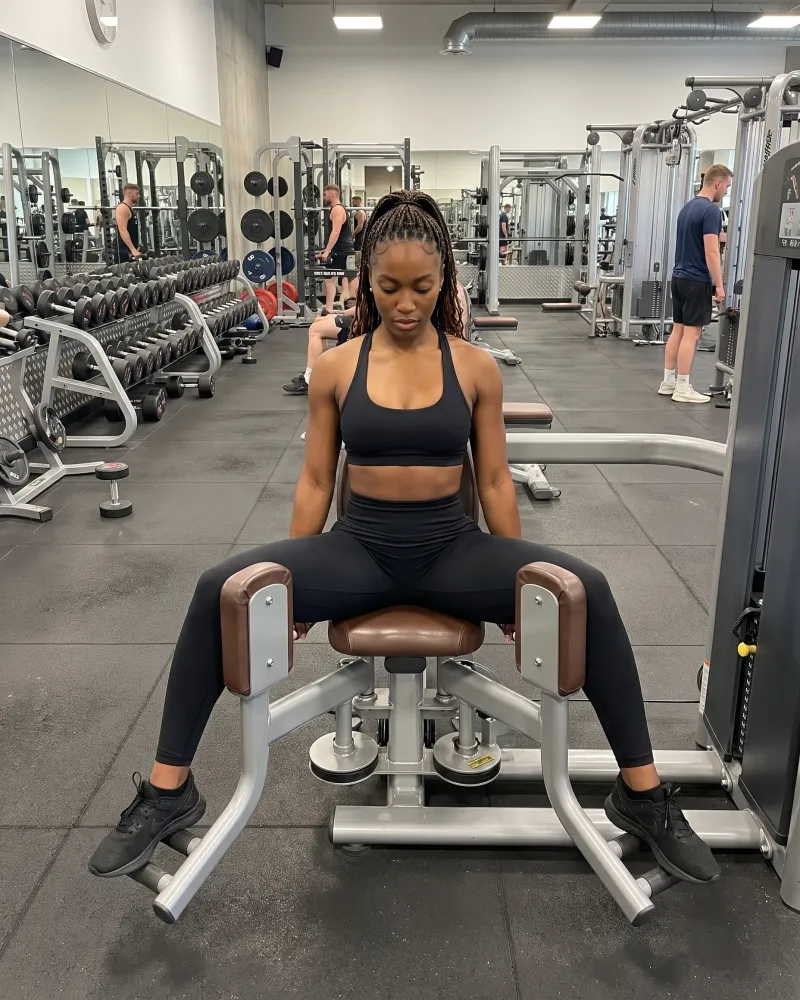
2. Seated Hip Abduction
The easiest way to load abduction heavy and keep adding weight. Lean your torso forward over your thighs, push your knees out, and pause for a second at the widest point. Lighter weight with a real pause beats a heavy weight you bounce.
3. Cable Hip Abduction
Ankle strap on, stand side-on to a low cable, and sweep your outside leg out and slightly back. Keep your torso still — if you’re leaning away from the machine to move the weight, it’s too heavy.
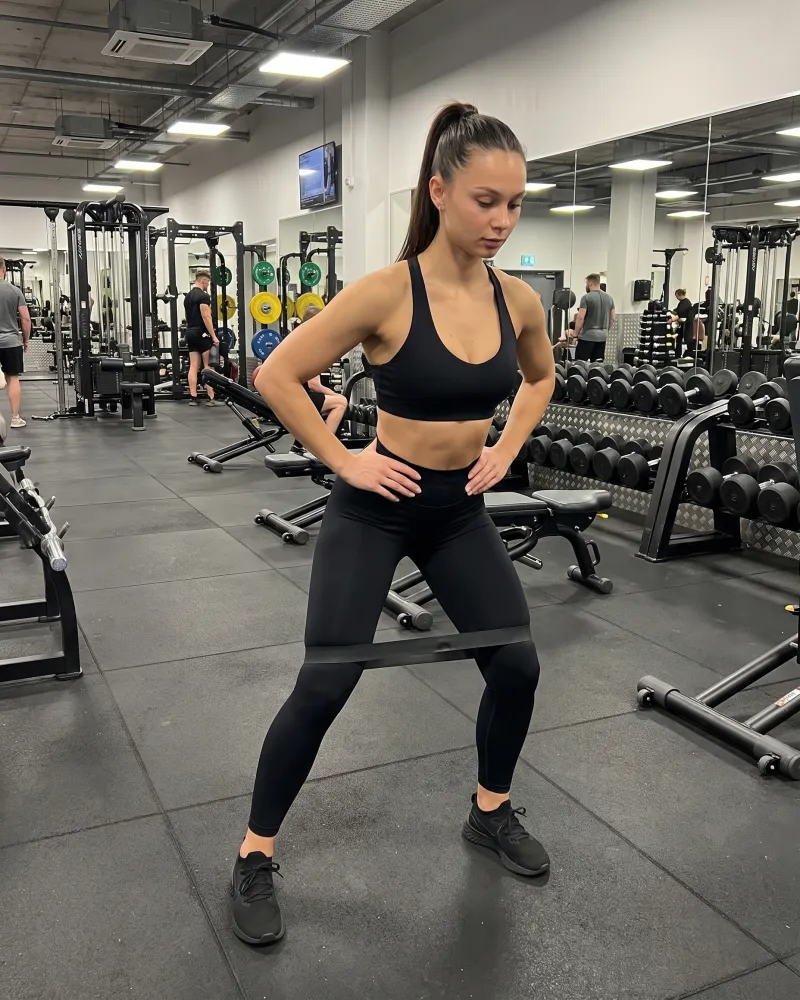
4. Banded Lateral Walk
A mini band above your knees, a quarter squat, and slow side steps without letting your knees cave. In fine-wire EMG testing, side-stepping was second only to the clamshell for working the glute medius and upper glute max relative to the tensor fasciae latae, another hip abductor at the front of the hip (Selkowitz, Beneck and Powers, 2013).
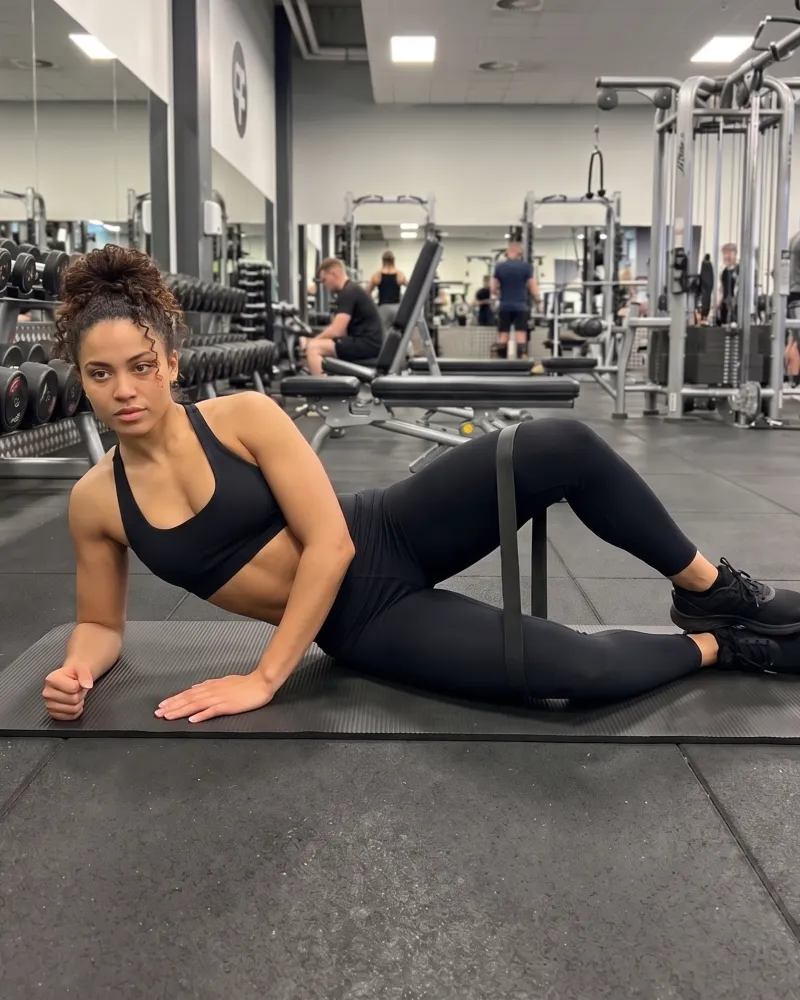
5. Banded Clamshell
Lie on your side, knees bent, band above your knees, and open your top knee without rolling your hips back. It looks easy. It isn’t if you go slowly. The clamshell scored best of all 11 exercises in that 2013 study for glute work relative to the tensor fasciae latae (Selkowitz, Beneck and Powers, 2013).
6. Angled Cable Kickback
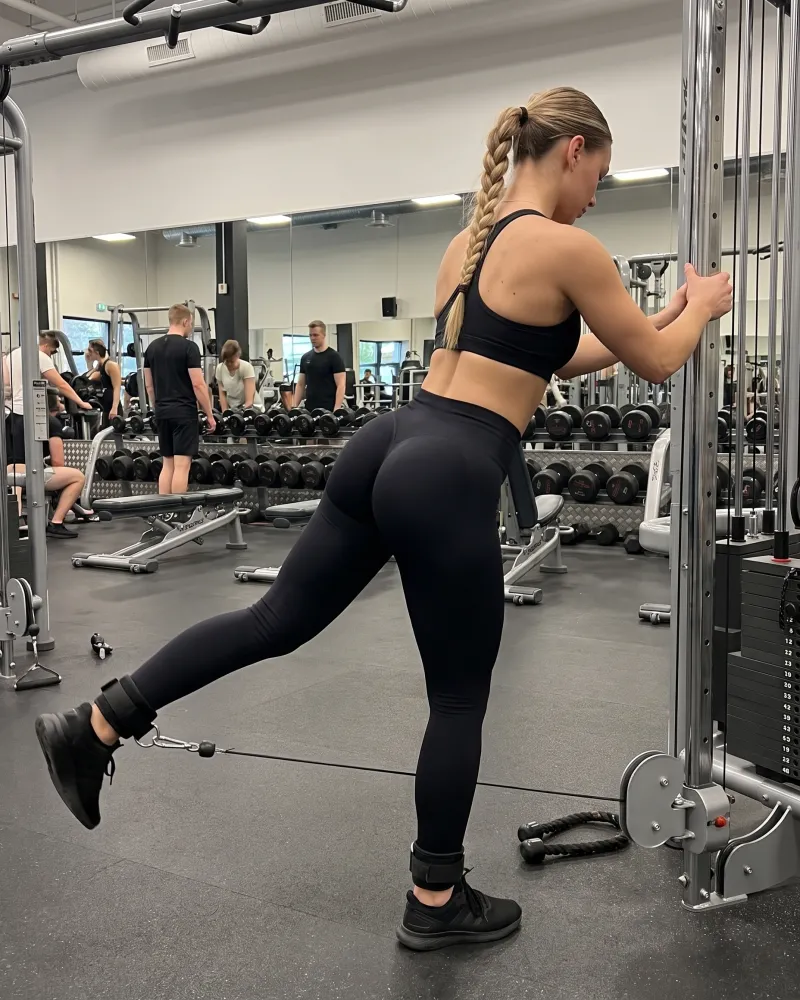
A regular kickback is hip extension. Kick back and slightly out to the side and you add abduction, which brings in the top. Lean forward a little, keep your hips square, and squeeze at the end of each rep.
7. Bulgarian Split Squat or Step-Up
Single-leg work builds the whole glute max one side at a time, so a weaker side can’t hide. For a split squat, lean your torso forward slightly and sit down into the front hip. For a step-up, use a box about knee height and drive through the front heel.
8. Single-Leg RDL
Hinge forward on one leg until you feel a deep stretch in that glute, then stand back up. Your glute medius works the whole time to keep your hips level, which is why it’s harder than it looks. Go light at first; balance is the limiter.
9. 45-Degree Back Extension, Feet Out
Set the pad just below your hip crease, turn your feet out, round your upper back slightly and drive up with your glutes, not your lower back. Turning your feet out puts your hips in outward rotation. That tweak hasn’t been measured on its own, but it applies the same rule as the clamshell.
You won’t see sumo squats or curtsy lunges here, even though other lists include them. Both are fine leg exercises, but they’re mainly hip extension with your legs set wide or crossed — your leg doesn’t move out to the side or rotate outward against resistance. I’d rather spend those sets on abduction, which works the top directly. For more abduction and kickback variations, see my glute accessory exercises guide.
Sample Upper Glute Workout
One session, about 45 minutes, that you can do today:
| # | Exercise | Sets × reps | Rest | Home version |
|---|---|---|---|---|
| Warm-up | Glute bridge, banded lateral walk, clamshell | 1 × 15 each | — | Same |
| 1 | Hip thrust, band above the knees | 4 × 8–10 | 2 min | Banded hip thrust off the couch, 4 × 15 |
| 2 | Bulgarian split squat | 3 × 8–10 per leg | 90 s | Couch-elevated split squat |
| 3 | Seated hip abduction, leaning forward | 3 × 15–20, 1-second pause | 60 s | Seated band abduction |
| 4 | Angled cable kickback | 3 × 12 per side | 45–60 s | Banded kickback |
| Finisher | Banded lateral walk | 2 × 20 steps each way | — | Same |
How to run it:
- The warm-up is just a warm-up. Five easy minutes to get moving — it doesn’t grow anything on its own.
- Heaviest first. Hip thrusts while you’re fresh, then the single-leg work, then abduction and kickbacks.
- Push close to failure. End each set with one to three reps left in the tank.
- Progress every week or two. When you hit the top of the rep range on every set, add weight or use a heavier band next time.
Already have a glute day? Don’t start over — add the seated abduction and the lateral walk to the end of it.
Build It Into Your Week
| Day | Exercise | Sets × reps | Rest | Home swap |
|---|---|---|---|---|
| Day 1 | The sample workout above | — | — | Home version |
| Day 2 | Single-leg RDL | 3 × 8–10 per leg | 90 s | Dumbbell or backpack |
| Day 2 | Cable hip abduction | 3 × 12–15 per side | 45 s | Standing band abduction |
| Day 2 | Banded clamshell | 3 × 20 per side | 45 s | Same |
| Day 3 | Hip thrust | 3 × 10–12 | 2 min | Banded hip thrust off the couch |
| Day 3 | Step-up | 3 × 10 per leg | 90 s | Step-up onto a sturdy stair |
| Day 3 | 45-degree back extension, feet out | 3 × 12–15 | 60 s | Reverse hyperextension off a bed or bench |
Leave about 48 hours between glute days. Only have two days? Run Day 1 and Day 3 — training a muscle at least twice a week grows it better than once (Schoenfeld, Ogborn and Krieger, 2016) — more on that in how often to train glutes. The week mixes lifts that load your glutes squeezed (hip thrusts, kickbacks) with lifts that load them stretched (split squats, single-leg RDLs); I explain why in shortened vs lengthened glute exercises. Never lifted before? Start with the beginner glute program.
Want this built around your actual week? Join the waitlist — Build The Shelf is named after exactly this. The Glute Routine Builder fits your upper-glute work to your days, time and equipment, tells you when to add weight, and keeps private side-by-side photos so you can watch the shelf fill in.
Upper Glute Exercises at Home
You don’t need machines. A mini band, a long resistance band and a couch cover every move:
- Banded hip thrust with your shoulders on the couch
- Seated band abduction on the edge of a chair
- Banded lateral walk and banded clamshell
- Banded kickback, anchored to a door or table leg
- Step-up onto a sturdy stair
- Single-leg RDL with a dumbbell or a loaded backpack
The rule doesn’t change at home: you still have to make it harder over time. Use a heavier band, slow the reps down, add pauses, or add reps. The home column in the sample workout above is a full session. If you have a pair of dumbbells, the dumbbell hip thrust is the best upgrade.
Why Is It So Hard to Grow Upper Glutes?
Usually one of these:
- No abduction or rotation work. A program of squats, lunges and hinges builds the glute max as a whole but barely touches the glute medius. That’s the most common story: plenty of glute growth, but the upper-outer corner hardly changes.
- Band work that never gets harder. Ten minutes of the same light band “activation” before every session won’t keep growing anything.
- Not enough food or not enough sets. Muscle needs enough protein, enough total food, and enough hard sets each week.
- Frame. Your pelvis shape and where you store fat limit how shelf-like the outline can look. Training moves the needle within your frame; it doesn’t replace it.
How Long Does It Take to Build a Glute Shelf?
- Weeks 1–4: your strength climbs, but your shape mostly looks the same. That’s normal — early strength gains come mostly from your nervous system learning the lifts, before muscle growth takes over (Moritani and deVries, 1979).
- Weeks 8–12: the top starts to fill in, usually visible from the side first.
- Months 6–12: a shelf other people notice.
These are typical ranges, not promises, and they depend on adding weight over time, two to three sessions a week, and enough protein and total food. Your real before and after is a side photo taken every week or two in the same light and clothes — the mirror is too slow to show it. More on that in how long it takes to grow glutes.
The shelf is the part of your glutes you can build on purpose. The Build The Shelf app plans that work around your week and keeps your progress photos private — join the waitlist to get it first.